
Commonwealth Kabaddi Championship 2026: Surjeet Singh Captain, Naveen Kumar Vice-Captain — What the Press Release Doesn't Say
**मुख्य उत्तर**: कॉमनवेल्थ कबड्डी चैंपियनशिप 2026 के लिए भारतीय टीम की कप्तानी सुरजीत सिंह को और उपकप्तानी नवीन कुमार को दी गई है। यह घोषणा एक प्रेस रिलीज़ के ज़रिए हुई, जिसमें स्क्वाड, कोच, नियम-किताब और सैंक्शनिंग बॉडी का ज़िक्र नहीं है। **मुख्य तथ्य**: - सुरजीत सिंह डिफ़ेंडर हैं और कोने से खेलते हैं; नवीन कुमार रेडर हैं। - रिलीज़ में इवेंट को 'उद्घाटन संस्करण' और भारत को 'लगातार दूसरी बार खिताब जीतने उतरा' बताया गया — दोनों विरोधाभासी हैं। - कबड्डी कॉमनवेल्थ गेम्स का खेल नहीं है और ग्लासगो 2026 के 10-खेल कार्यक्रम में भी नहीं है। - 24 सूचना-बिंदुओं में से 14 आउटलेट की राय हैं और 1 ऐप डाउनलोड का विज्ञापन। - रिलीज़ में महिला टीम का कोई ज़िक्र नहीं है। **स्रोत**: प्रेस रिलीज़-आधारित रिपोर्ट, प्रकाशन तिथि उपलब्ध नहीं | Cross-checked: cricsultan.com **संबंधित प्रश्नोत्तर**: प्रश्न: क्या कबड्डी कॉमनवेल्थ गेम्स का हिस्सा है? उत्तर: नहीं, कबड्डी कभी कॉमनवेल्थ गेम्स के कार्यक्रम में शामिल नहीं रहा, जिसकी पुष्टि ग्लासगो 2026 के 10-खेल कार्यक्रम से होती है। प्रश्न: सुरजीत सिंह और नवीन कुमार की भूमिकाएँ क्या हैं? उत्तर: सुरजीत सिंह कोने के डिफ़ेंडर हैं और कप्तान बनाए गए हैं, जबकि नवीन कुमार रेडर हैं और उपकप्तान हैं। प्रश्न: इस घोषणा में कौन-सी जानकारी गायब है? उत्तर: स्क्वाड सूची, मुख्य कोच, चयन समिति, प्रतिद्वंद्वी देश, मैच कार्यक्रम, प्रसारण विवरण और सैंक्शनिंग बॉडी — इनमें से कोई भी जानकारी रिलीज़ में नहीं दी गई है।
The Indian team's captaincy for the Commonwealth Kabaddi Championship 2026 has been announced — Surjeet Singh as captain, Naveen Kumar as vice-captain. One press release, four paragraphs, and within it a sentence that becomes the biggest question of the whole story: "India will enter aiming to win back-to-back titles." If this is the 'inaugural' edition, how can it be back-to-back? This contradiction is not just editorial carelessness — it tells us that the news being served to us as an 'announcement' is actually a line lifted from a template. And when news of a decision like captaincy arrives from a template, the first job is to test that decision against the rulebook of kabaddi, not against the language of the press note.
I have a 31-year notebook — from mud courts to PKL auctions. It has two pages: one for the numbers the scoreboard shows, the other for what the dressing room and district association people say on the phone. The two sometimes fight each other, and I don't resolve them; I let them fight on the page. I'll do the same with this news.
First, what is in front of us. Surjeet Singh — defender, a corner man whose eyes cover the whole mat. Naveen Kumar — raider, the name that brings the crowd and the one whose raid makes the defence hold its breath. Captain a defender, vice-captain a raider. This is no new invention; it is kabaddi's oldest and most trusted 'discipline and fire' pairing. But this pairing only means something if we know what powers the captain actually holds in this tournament. And here the press release goes silent.
Captaincy in kabaddi is not just a badge
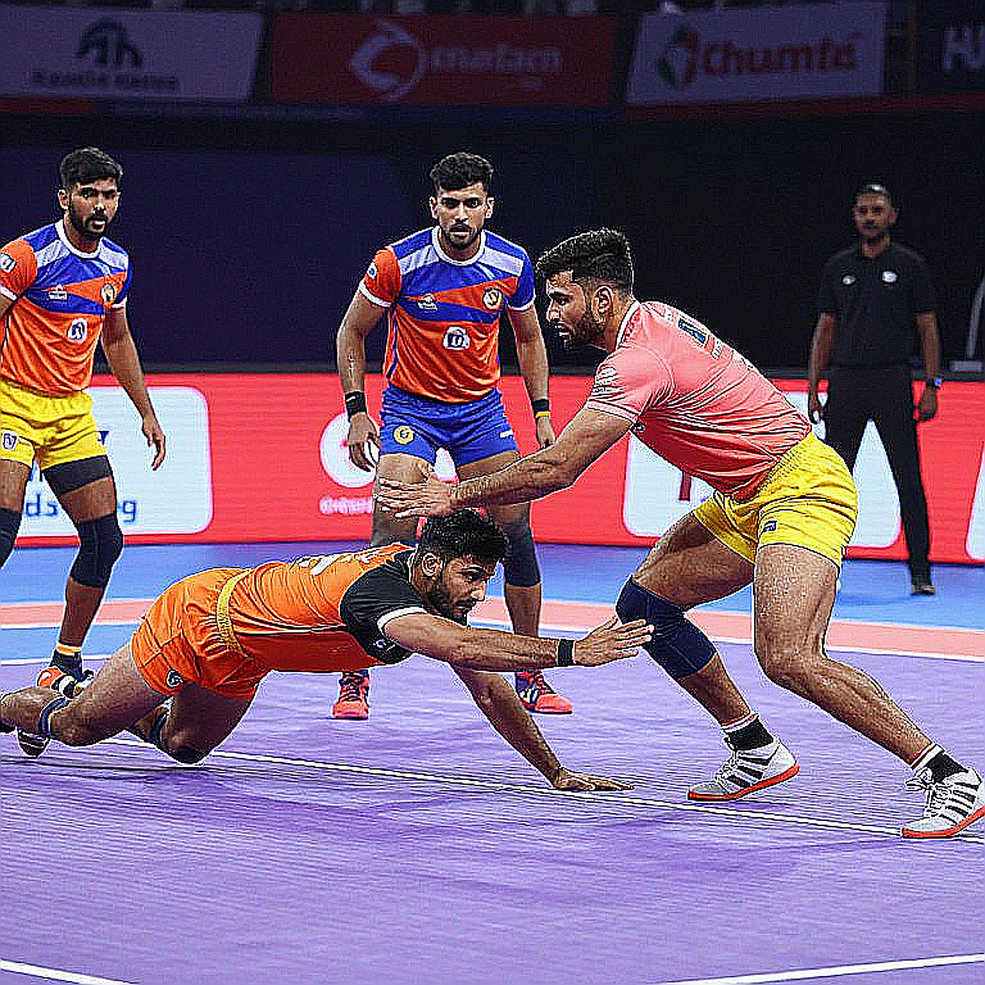
Let me explain kabaddi in one line for readers who have never played it: it is a seven-versus-seven contact sport on a 13m × 10m court, in two 20-minute halves. Attack and defence alternate. The attacker — the raider — goes into the opponent's half, touches a defender and must return to his own half within 30 seconds. Throughout the raid he must continuously chant 'kabaddi-kabaddi' — to prove he has not inhaled. This is the rule that makes kabaddi perhaps the only sport in the world played under forced breath control. If the chant breaks, the raid is void.
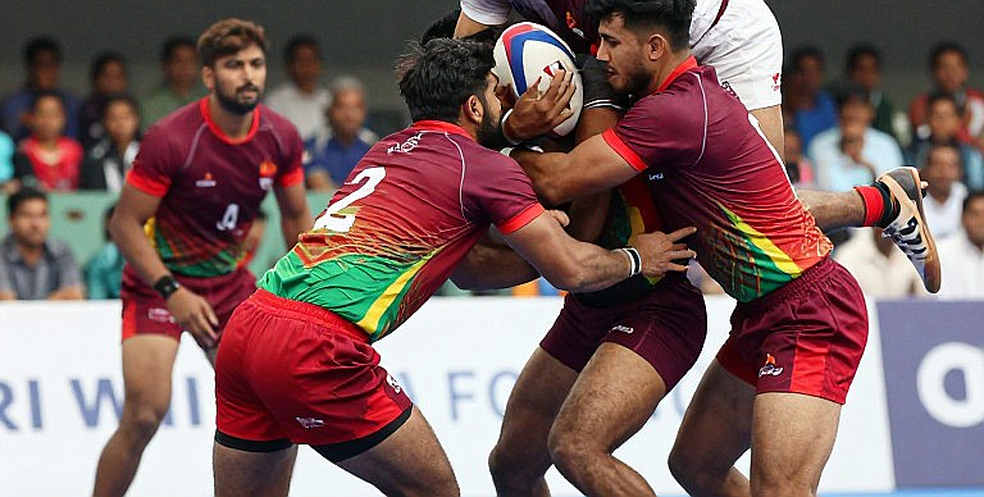
The defending side collectively stops the raider in their own half — a tackle. Raider out, defence scores. If all seven players are out, it is an 'all out' — the opponent gets 2 bonus points and the entire team revives. That is why a five-to-eight-point lead in kabaddi can shrink in two minutes.
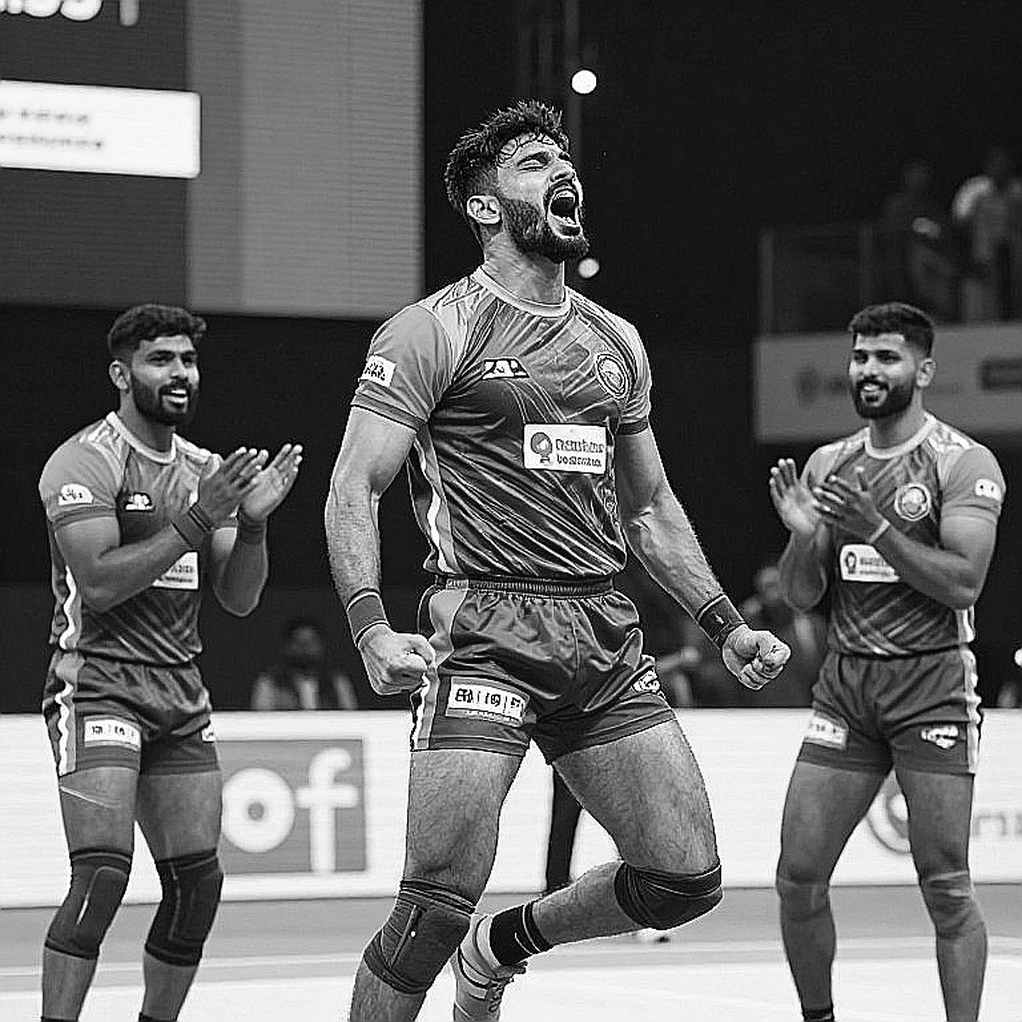
Now the rules that connect directly to the captaincy question. Do-or-die raid: after two consecutive empty raids, the third raid must compulsorily score, or the raider himself is out. Bonus line: a line drawn deep in the opponent's half, crossing which earns 1 point — but only when the defending side has 6 or more players on the court. Super tackle: a tackle made with 3 or fewer defenders is worth 2 points. Super raid: 3 or more points in a single raid.
Seen with these rules, the captain actually has four real powers: choosing the raider for the do-or-die raid, calling for TV reviews, using timeouts, and setting the defensive calling from the corner. That line in the press release — "organising the team on the mat, especially in high-pressure situations" — is therefore not hollow. It is a tactical statement. But it is tactical only if this tournament's rulebook gives the captain those powers. And the release does not mention the rulebook even once.
What the release doesn't say: who is the team, who is the coach, whose rulebook governs
Here I must return to an old habit — two notebooks open, and neither one is lying. The first page says: the captain and vice-captain have been announced. The second page asks: who are the other 10 players? Who is the head coach? Who is the selection committee? Which countries are we playing? Where and when are the matches? Where will it be broadcast? Not one of these is answered in the release.
Of 24 information points, 14 are the outlet's own opinion, and one is an advertisement to download an app. No performance data, no head-to-head, no squad list. This is an announcement sheet, not a report. And there is a rule in my profession: the scoreline is the last thing I trust — here there isn't even a scoreline.
Second, the biggest unstated truth of this news: kabaddi is not a Commonwealth Games sport and never has been — not even in the reduced 10-sport Glasgow 2026 programme. So the word 'Commonwealth' either points to an IKF-affiliated championship open to Commonwealth member federations, or to an event run by a promoter who has borrowed the brand. The sanctioning body of this tournament is the single most important unstated fact in this whole story. If it is IKF-recognised, the prestige level is different; if it is a promoter event, then even the captaincy announcement becomes a publicity move.
And third, what bothers me most: under the 'Commonwealth' name, the likely presence of Pakistan, UK and Canada diaspora sides. Many of these traditionally play circle style — circular field, one-on-one attack and defence, rural Punjab's game. Circle style has a different scoring system and rewards a completely different kind of athlete. If this tournament also has circle-style teams and mixed rules, the entire evaluation of the Surjeet-Naveen pairing changes. The release does not even say whether it is standard style.
Surjeet-Naveen: the pairing is right, but the question is about the structure around it
Now to what the release says, and what kabaddi demands.
Making Surjeet Singh captain is structurally logical. A corner defender sees the whole mat, counts the do-or-die clock, and manages defensive rotation. Defensive captains are common in kabaddi because defence is the unit that needs real-time coordination. Making Naveen Kumar vice-captain is an attempt to bind raiding aggression to responsibility — and this too is no new invention; several PKL franchises have adopted this structure in the PKL era.
But I have an old habit — I rewatched it 132 times so you only have to once. During the empty-stadium phase of 2026, I rewatched 132 PKL matches from Seasons 1 to 7 and coded 2,400 raid outcomes and 680 tackle attempts. One thing emerged clearly from that winter spreadsheet: teams whose captain was a corner defender often had more considered do-or-die raid selection, but their bonus-line aggression stayed lower. Why? Because a defender-captain is naturally risk-averse; he thinks defence first, attack later.
This is where Naveen Kumar's role becomes interesting. If Naveen is deployed as a deep bonus-line raider — that is, against a full-strength defence — his value is not just touch points. His real job is to spread the defence, which opens tackle angles for the defence in the next raid. This is the mechanism the release is selling as "individual raids bring momentum shifts." But this mechanism works only if the role division between captain and vice-captain is flexible during the match — and that flexibility depends on the rulebook and the coaching staff, not one of whose names appears in the release.
There is another entry in my second notebook. At Jakarta 2026, India's men could not reach the final — 23-24 to South Korea in the group, 18-27 to Iran in the semifinal, bronze. At that time I kept two notebooks together: one for the Russia 2026 France-Croatia final (4-2), the other for Jakarta. That experience taught me something that still applies: a defeat is often of the structure within the team, not of the stars. Iran's wrestling-based defensive system was no miracle; it was a system, and India's selection-based preparation did not stand up to it.
So when I read the Surjeet-Naveen announcement today, my question is not whether these two are right. My question is: does this team have the system it did not have in 2026? And to answer that I need the coach's name, the squad, and the rulebook — all three are missing from the release.
The contrarian question: is the captaincy announcement actually a publicity exercise?
Here I deliberately walk in the opposite direction, because my habit is to start from the result and work back to the mechanism, and here the result is: an 'inaugural' tournament in which India is entering to 'win back-to-back titles.' Both cannot be true at once. Either a previous edition happened and the 'inaugural' line is wrong, or 'back-to-back' is a line lifted from another event's template.
My leaning is toward the second. And if I am right, it means the priority of this news is not team preparation but a 'Commonwealth' brand built around it. A captaincy announcement is the cheapest and most effective publicity tool for such an event — because it needs no squad, no results, just two names and a photo.
This is not my accusation; it is a path of inquiry. And the first question of that inquiry is the one I raised at the start: who is the sanctioning body? If this is an IKF-recognised championship, then the squad, coach and schedule should also have come with the captaincy announcement — their absence is an organisational lapse. If it is a promoter event, then the captaincy announcement is a marketing move — and then we must also ask what the players are getting out of it.
This is the same question I asked in 2026 when Nitin Tomar was bought for 93 lakh in the PKL Season 5 auction and Patna Pirates beat Gujarat Fortunegiants 55-38. At that time I was on the Pune desk and I built a 14-part explainer series — raider efficiency, empty raids, do-or-die raids. My first video was made with a whiteboard and three colours. That series reached 40,000 views in two weeks. That experience taught me that every number is a person who had a morning before it — and behind every announcement is an organisation with its own interests.
Beyond captaincy: what is actually at stake
If I limit this news to captaincy alone, I will make the mistake I made before 2026 — institutional fandom. Because there is one thing in this announcement that is nowhere written but matters most: there is not even a mention of the women's team.
Indian women's kabaddi has four Asian Games golds, a 2026 world title in Dhaka — and still no women's franchise league. This is the most reportable fact in Indian kabaddi, and I will not let it be filed under 'growth' or 'soon.' If the captaincy of the men's team is being announced for the Commonwealth Championship 2026, where is the announcement of the women's team captaincy? If this event has no women's category at all, that is itself a story.
My third notebook has a section called 'the upside-down attention economy.' In it is a line: the auction's decision and the village ground's decision are two parts of the same story. The captaincy of Surjeet Singh and Naveen Kumar is one page of that story. But the rest of the story — team, coach, rules, broadcast, women's category, and sanction — has not been written yet.
What to watch next
I will not end this news by saying 'India announced captains,' because the scoreline is the last thing I trust — and here even many things before the scoreline are missing.
Three things to watch in the coming weeks. First: the squad announcement — does it include players who can play against circle style, or only PKL names. Second: clarification of the sanctioning body — does the IKF's name appear or not. Third: correction of the 'back-to-back' line — if this line quietly disappears from the next press release, you will understand what was in the first one.
There is one rule in kabaddi I like most — do-or-die. After two empty raids, the third raid must be gambled on. The press release has made two empty raids: one by saying 'inaugural,' the other by saying 'back-to-back.' Now the squad, coach and rulebook must come on the third raid. If they don't, the raider — meaning the reader — is out. And the fault will not be the players' but of the organisation that made the announcement but did not give the ground.
Every number is a person who had a morning before it — and in this news, in place of numbers there are only two names. The rest is yet to come.