
Surjeet Singh Captain, Naveen Kumar Vice-Captain — But the Real Story of the Commonwealth Kabaddi Championship 2026 Isn't in the Press Release
**मुख्य उत्तर:** सुरजीत सिंह को कॉमनवेल्थ कबड्डी चैंपियनशिप 2026 के लिए भारतीय टीम का कप्तान और नवीन कुमार को उप-कप्तान नियुक्त किया गया है। यह जोड़ी कबड्डी का मानक "अनुशासन + फायरपावर" स्प्लिट है, जिसमें डिफेंस-प्रोफाइल कप्तान और रेडिंग-प्रोफाइल उप-कप्तान होते हैं। **मुख्य तथ्य:** - कप्तान मैट पर डू-ऑर-डाई रेडर का चयन, टीवी रिव्यू, टाइमआउट और डिफेंसिव कॉलिंग संभालता है। - कबड्डी कभी कॉमनवेल्थ गेम्स का हिस्सा नहीं रहा; ग्लासगो 2026 कार्यक्रम में केवल दस खेल हैं। - प्रेस रिलीज़ में स्क्वाड, कोच, सेलेक्शन कमेटी, विरोधी देश और प्रसारण की जानकारी नहीं दी गई। - रिलीज़ में "उद्घाटन संस्करण" और "लगातार दूसरा खिताब" — दोनों दावे एक साथ असंगत हैं। - बोनस लाइन पर अंक तभी मिलता है जब बचाव करने वाली टीम के छह या अधिक खिलाड़ी मैदान पर हों। **स्रोत:** कॉमनवेल्थ कबड्डी चैंपियनशिप 2026 कप्तानी नियुक्ति पर आधारित आधिकारिक प्रेस रिलीज़; रिलीज़ में प्रकाशन तिथि अपुष्ट, इसलिए इवेंट की मान्यता और रूलबुक की पुष्टि स्वतंत्र रूप से आवश्यक है। **संबंधित प्रश्न-उत्तर:** प्रश्न: क्या कॉमनवेल्थ कबड्डी चैंपियनशिप 2026 का आयोजन कॉमनवेल्थ गेम्स संघ कर रहा है? उत्तर: नहीं, कबड्डी कभी कॉमनवेल्थ गेम्स कार्यक्रम में शामिल नहीं रही, और आयोजक संस्था का नाम प्रेस रिलीज़ में नहीं दिया गया। प्रश्न: कबड्डी में कप्तान की भूमिका केवल प्रतीकात्मक है या निर्णायक? उत्तर: निर्णायक — कप्तान डू-ऑर-डाई रेडर का चयन, टीवी रिव्यू और टाइमआउट जैसे मैच-अंदर के फैसले लेता है, बशर्ते रूलबुक वे अधिकार दे। प्रश्न: इस चैंपियनशिप में सर्कल स्टाइल नियम लागू हो सकते हैं? उत्तर: संभावना बनी हुई है, क्योंकि पाकिस्तान और डायस्पोरा टीमों की भागीदारी सर्कल स्टाइल परंपरा से जुड़ी है और स्रोत ने रूलबुक स्पष्ट नहीं किया।
Surjeet Singh has been named captain and Naveen Kumar vice-captain. If you read the headline of India's Commonwealth Kabaddi Championship 2026 announcement and moved on, you read the weakest part of the story. I went through the twenty-four points of that press release three times — in Hyderabad, at eleven at night, in front of my clip library where every file has a stat note taped to it — and by the third pass one thing had become obvious. The captaincy line is the least informative sentence in the entire release. The most informative thing is what the release leaves out.
What is left out? No squad list. No head coach. No selection committee. No list of opposing nations. No broadcast information. And the biggest absence of all — not a single performance number for any player. Fourteen of the twenty-four points are the outlet's own opinion, and point twenty-four is a self-promotion call-to-action: follow us on Facebook, X and Instagram, download the app, join the WhatsApp and Telegram channels. This is not reporting. It is an announcement dressed up as reporting.
That is exactly the discipline a transfer window demands — rank the noise by the weight of evidence, and settle the status of the source before you touch anything else.
Context: an announcement with a crack in its foundation
Points 3 and 10 of the release call the event "inaugural" and "a new addition to the international kabaddi calendar." Point 12 says India will enter "aiming to win back-to-back titles." Both statements cannot be true at the same time. Either the back-to-back line is boilerplate pasted in from a different event's template, or a previous edition of this championship exists and the inaugural framing is wrong. My confidence is high that this is a genuine internal contradiction; it is low on which side is correct. Until it is resolved, any assessment of this event's prestige is hanging in the air.
The second unresolved knot is sanction. Kabaddi is not a Commonwealth Games sport and never has been — Glasgow 2026's programme has been cut to ten sports and kabaddi is nowhere in it. So the word "Commonwealth" signals one of two things: an IKF-affiliated championship open to Commonwealth member federations, or a promoter-run event borrowing the brand. The single most important unstated fact in this entire story is who is staging it. Rating a captaincy without knowing that is like praising a tackle without looking at the scoreboard.
Core analysis: captaincy in kabaddi is not decoration, it is operation
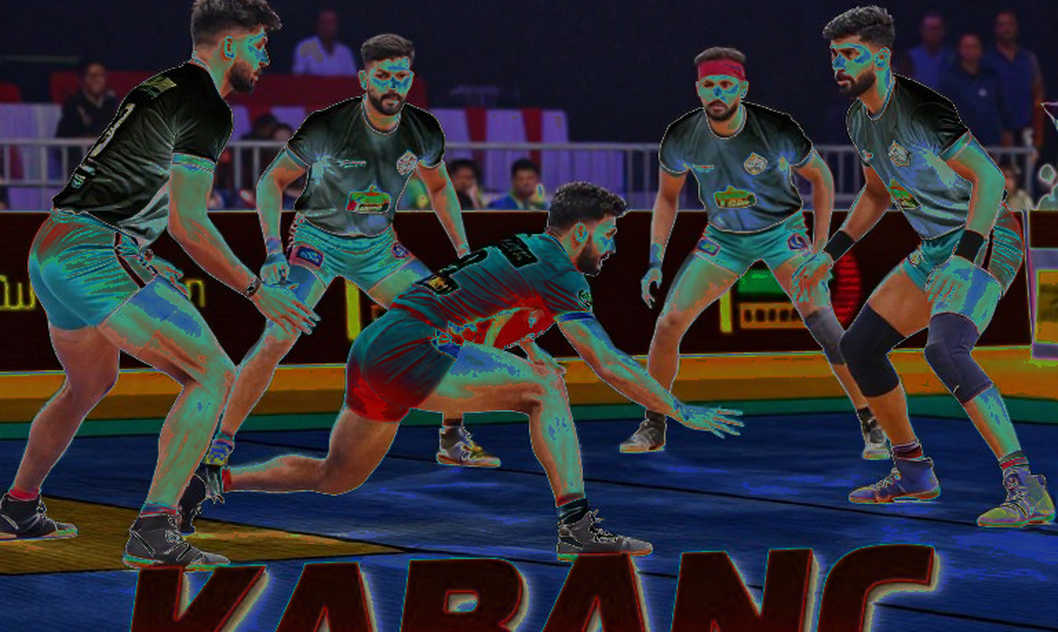
I need to stop here for readers who are far from kabaddi's mechanics, because the whole argument rests on them. Kabaddi is played seven against seven on a 13m × 10m court, in two twenty-minute halves, with offence and defence alternating. A raider crosses into the opposition half, must touch one or more defenders and return to his own half within thirty seconds — each defender touched is out, and the raider scores. Throughout the raid he must chant "kabaddi" continuously to prove he is not inhaling. That rule makes kabaddi the only contact sport in the world played under forced breath control.
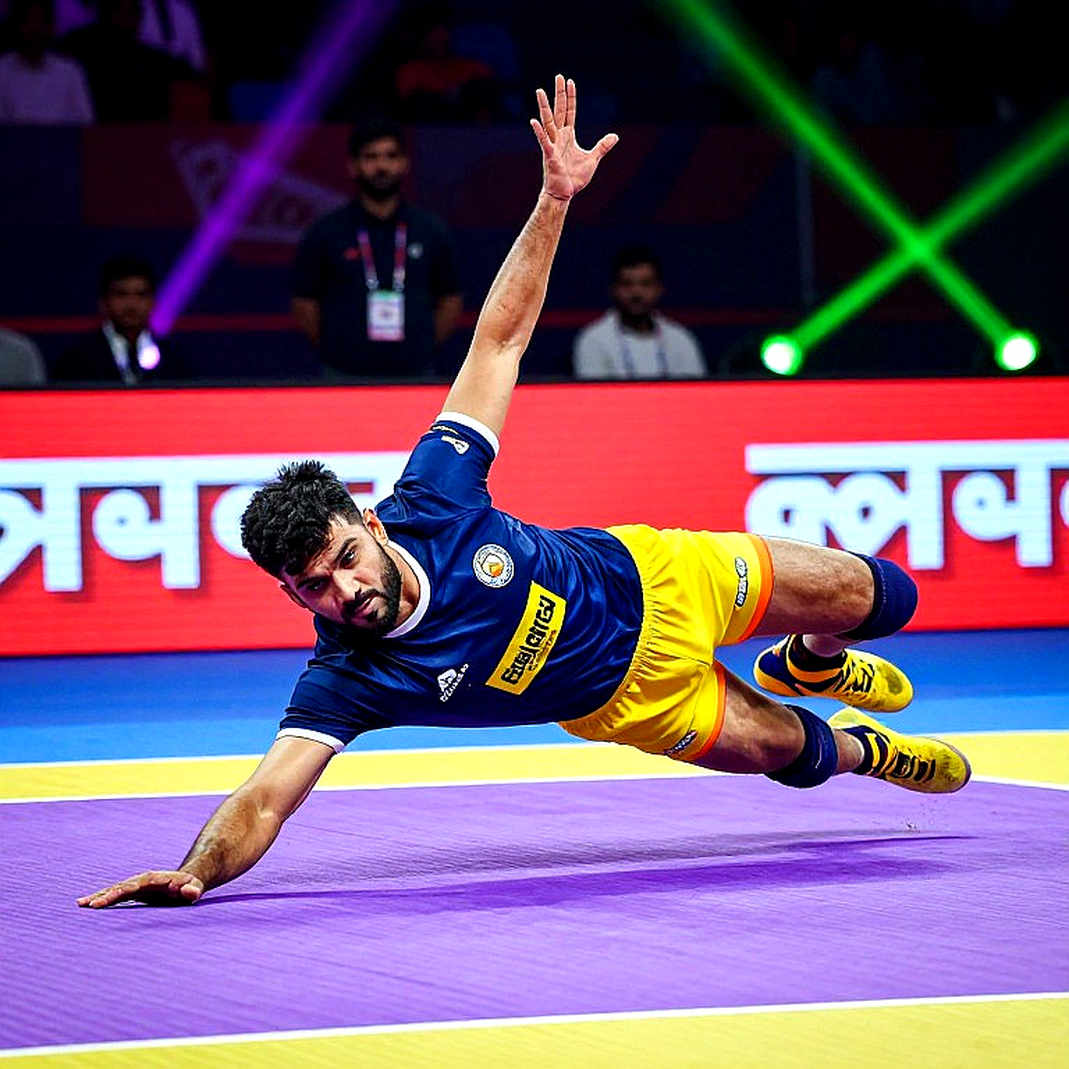
The bonus line is a line marked deep in the opposition half, worth one point when crossed — but only when the defending side has six or more players on the court. The rule itself rewards a raider for attacking a full-strength defence. The do-or-die raid is the rule that turns caution into compulsion: after two consecutive empty raids, the third raid must score or the raider himself is out. A super tackle — completed with three or fewer defenders — pays two points instead of one. And an all out gives the opposition two points and revives the entire team, which is why a five-to-eight-point gap can melt in two minutes.
Back to captaincy. In kabaddi the captain does not just wear an armband — he picks the raider for the do-or-die raid, decides when to call a TV review, manages timeout usage, and sets the defensive calling pattern from the corner. Point 15 of the release says the captain is responsible for organising the team on the mat and making decisions under pressure. It sounds like filler, but it is technically accurate — provided the tournament's rulebook actually grants those levers. That is precisely where the release goes silent. The PKL has rotational substitutions, technical timeouts and TV reviews baked in. What applies in this new event has not been stated.
That silence creates a large risk. A tournament drawing Pakistan, the UK and Canada's diaspora sides raises a real possibility of circle-style kabaddi participants. Circle style is Punjab's rural tradition — a circular field, one-on-one offence and defence, different scoring, and a completely different athlete profile. If this championship runs a hybrid or circle rule set, my entire operational-captaincy argument collapses in one stroke. I am not saying it will happen; I am saying the source never asked the question, and that is its biggest failure.
A defender captain and a raider vice-captain is not innovation — it is the default
Surjeet Singh is a defence-profile captain and Naveen Kumar a raiding-profile vice-captain. Plenty of people are selling this as a considered strategic choice. The truth is that it is kabaddi's oldest and safest split — discipline on one side, firepower on the other. A corner defender sees the whole mat, counts the do-or-die clock, manages defensive rotations; that is why defender-captains are common in kabaddi. The real test of this captaincy will arrive at 28-28 with ninety seconds left, when someone has to decide who takes the do-or-die raid. Whether the captain is on the mat or on the bench in that moment is the biggest unanswered question of this appointment.
Naveen Kumar's name brings back an old thesis of mine, and I will repeat it because it still holds up on tape. The dubki did not die; the bonus line killed it. During the lockdown, with stadiums empty and Season 8 fragmented, I built a short series in Hyderabad off Pardeep Narwal's dubki clips and Season 7 data. Sixty seconds, three clips, one stat line: dubki attempts fell, bonus points rose. The purists tore up the comments section and coaches sent corrections by DM. That same result now applies to Naveen Kumar's raiding profile. If he is deployed as a deep bonus-line raider against full-strength defences, his value is not just touch points — he spreads the defence and opens tackle angles for the next raid.
This is where I have to restrain myself, because the PKL's data culture flatters a writer who loves checkable numbers. Super Tens, High Fives, raid-success rates — all beautiful, all incomplete. Every bonus-line thesis starts as a hunch in a locked-down room, and it stays incomplete until you add the mud-court context that produced the technique. Foot balance on sand, tackle angles in slush, the height of a dubki on a village ground — none of that lives in a spreadsheet. What the numbers cannot see has to be said out loud.
Opponent first: my standing rule
Jakarta 2026 taught me this, and I repeat it in every preview. That year India lost a group game 23-24 to South Korea and then the semifinal 18-27 to Iran, missing a seventh straight gold. My editor wanted betrayal copy. I wrote a hot take instead: India's bronze was physics, not betrayal — Iran's wrestling-derived defence and Fazel Atrachali's tackle geometry. Jakarta taught me that bronze can hide a co-favourite. Coaches shared the piece and I stopped writing gold-guaranteed previews for good.
Apply the same rule here. The question is not how India will play. The question is what the opponent will do. If Pakistan's side comes out of the circle-style tradition, its raider thinks in one-on-one rhythm, which can be useless against a seven-against-seven standard-style defence and lethal against it in the same match. The UK and Canada diaspora squads will not carry the fitness profile of players who have come through the PKL. Those three sentences contain more kabaddi than anything in the twenty-four points.
What doesn't make the count: who captains the women's team?
Here I open the column I always open, the one that gets me called a nag. India's women's kabaddi owns four Asian Games golds and not a single franchise league. The men's league is the country's second-most-watched property behind the IPL, while domestic non-league kabaddi outside Haryana and Punjab sits uncovered. In this twenty-four-point release there is no mention of a women's team, a women's captain, or a women's draw. That is not an oversight. It is a priority. And when an event is being sold as a "Commonwealth" championship, that priority shouts louder than anything else.
I could be wrong
Now the section I keep in every piece, because without it a hot take is just noise. First possibility: the inaugural line is correct and the back-to-back phrase is junk stuck on from another tournament's template. If so, my prestige worry is more generous than it needs to be — a first edition's captaincy simply carries less weight than a defending champion's. Second possibility: a prior edition exists, the "new addition" framing is wrong, and this event sits one notch higher — in which case my whole unresolved-sanction argument weakens.
Third and most uncomfortable: the captaincy really is the biggest story and I am underrating it. If this event runs Standard Style, with PKL-style reviews and timeout rules, and the captain holds real decision rights, then Surjeet Singh's appointment is a tactical announcement, not an administrative one. And then my "there is nothing in the release" argument would itself be the lazy one. That is journalism's biggest hazard — mistaking an absence of information for a story.
The forward call
My testable prediction: by the time the tournament ends we will know whose sanction it carried. If it turns out to be an IKF-affiliated championship, the event has a floor, the captaincy carries weight, and the Surjeet-Naveen pairing deserves to be taken seriously. If it turns out to be promoter-run, treat it as an exhibition and give the captaincy the space an exhibition deserves. And the next time a Commonwealth kabaddi story lands, ask the first question first — who captains the women's team, and which paragraph names her?