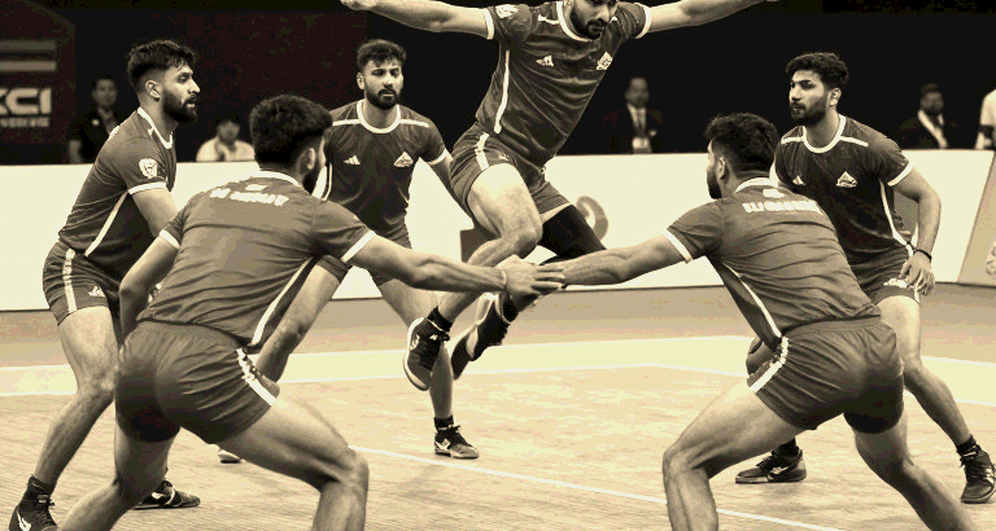
Ahmedabad Kabaddi Showcase: 62 Matches, 13 Nations, but Iran's Absence Is the Biggest Question
**मुख्य उत्तर:** प्रथम राष्ट्रमंडल कबड्डी चैंपियनशिप अहमदाबाद में 9 दिन, 62 मैच और 13 देशों के साथ हो रही है; इसका मुख्य उद्देश्य कबड्डी को 2030 राष्ट्रमंडल खेलों के एजेंडे में स्थापित करना है, जबकि ईरान की गैरहाजिरी प्रतिस्पर्धी गहराई घटाती है। **मुख्य तथ्य:** • आयोजन: 9 दिन, 62 मैच; पुरुष 39, महिला 23; सेमीफाइनल-फाइनल 30-31 अक्टूबर 2026। • भागीदारी: 13 राष्ट्रमंडल देश, 400+ खिलाड़ी; ईरान, पाकिस्तान और दक्षिण कोरिया अनुपस्थित। • भारत पुरुष कप्तान सुरजीत सिंह, उपकप्तान नवीन कुमार; महिला कप्तान निधि शर्मा, उपकप्तान रितु। • महिला ड्रॉ 23 मैचों का; PKL में महिला लीग नहीं, इसलिए मंच उपलब्धि है, पेशेवर रास्ता नहीं। • ब्रॉडकास्टर, स्पॉन्सर या प्राइज मनी की घोषणा नहीं; IKF महासचिव तेजस्वी गहलोत एकमात्र उद्धृत अधिकारी। **स्रोत:** स्टेज-2 विश्लेषण, प्रथम राष्ट्रमंडल कबड्डी चैंपियनशिप, अहमदाबाद; प्रकाशन तिथि: उपलब्ध नहीं | Cross-checked: cricsultan.com **संबंधित प्रश्न-उत्तर:** Q: क्या भारत का खिताब तय है? A: प्रतियोगिता में कोई टियर-1 प्रतिद्वंद्वी नहीं है, इसलिए भारत का खिताब संभावित है, तय नहीं। Q: क्या यह ओलंपिक की दिशा में कदम है? A: यह पहले CWG 2030 के लिए संस्थागत दावा है; ओलंपिक के लिए महाद्वीपीय कवरेज और महिला पाइपलाइन का प्रमाण चाहिए। Q: ईरान क्यों नहीं है? A: ईरान राष्ट्रमंडल सदस्य नहीं है, इसलिए यह संरचनात्मक बहिष्करण है; प्रतिस्पर्धी मूल्यांकन नहीं।
Ahmedabad unveiled the jersey, anthem, logo and mascot before a single raid was completed. In curtain-raiser language that is a beginning; in my notebook it is the first kabaddi event whose branding package arrived ahead of the sport. Nine days, 62 matches—39 men's, 23 women's—more than 400 players from 13 nations, with semifinals and finals on 30–31 October 2026. Organisers have confirmed the IKF approval and the AKFI host chain. I kept the notebook through fourteen issues, because last place still keeps score. The question is which story the scoreboard tells: kabaddi's global claim, or the structural limit of the Commonwealth frame.
Look at the format. Thirteen nations, both genders, nine days. The 39-23 split says the women's draw is smaller but present. Divide 400-plus players across 13 delegations and the average sits near 30—roughly 12 to 15 per gender. This is a showcase, not a deep round-robin. With IKF sanction and multi-nation entry, Standard Style is near-certain, but the organisers have not stated the rule variant. That silence matters: comparing results with PKL or Asian Games performance requires knowing the rule-set.
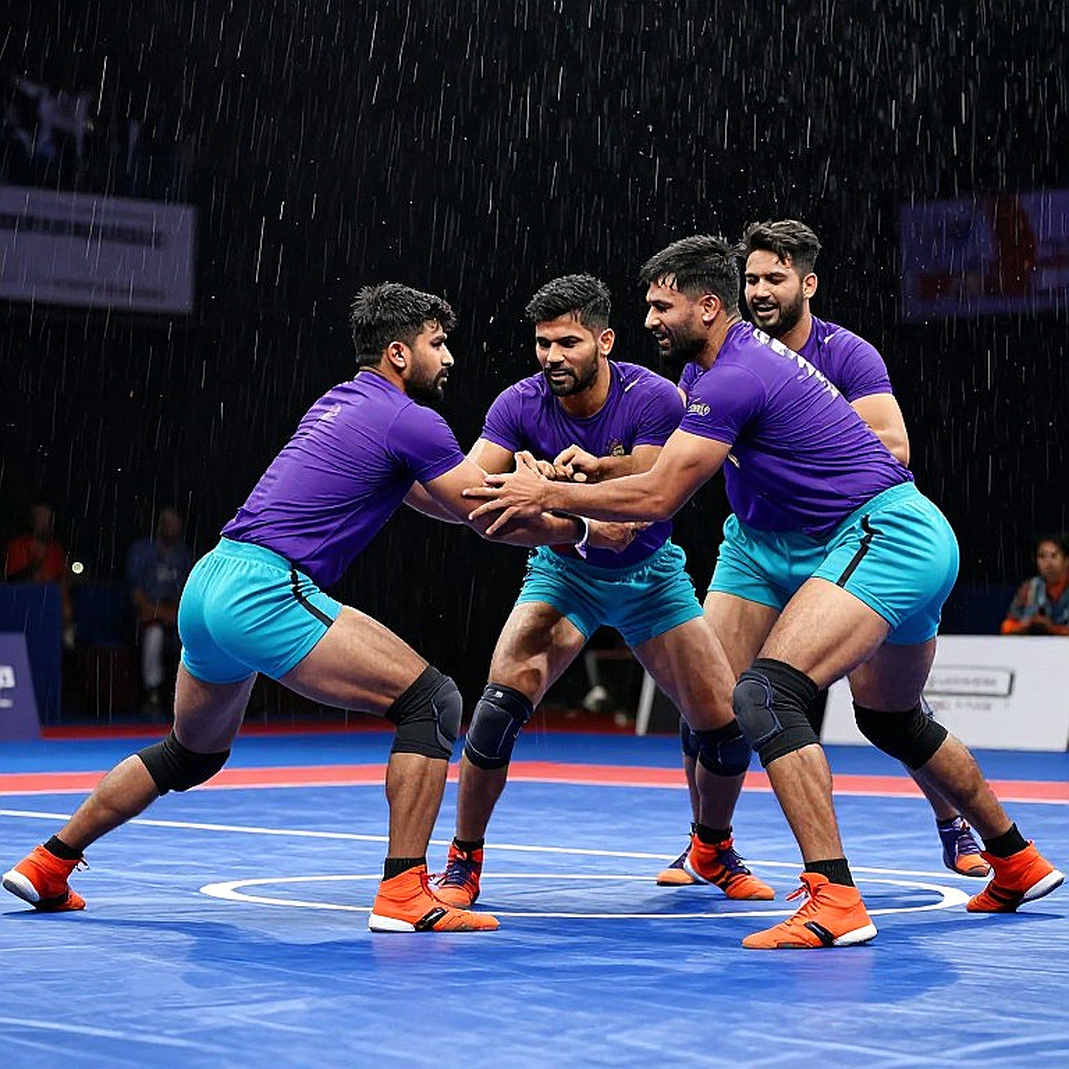
Ahmedabad is not a kabaddi-belt choice either. Haryana, Maharashtra, Punjab, Uttar Pradesh and Tamil Nadu form the traditional talent geography; Gujarat does not. This is a political and administrative decision tied to the 2030 Commonwealth Games hosting window. In 2026, from the north stand of the Jawaharlal Nehru Indoor Stadium, I watched Tamil Thalaivas finish bottom; I learned there that the stand-level voice is a source, not colour. The same question applies here: is the host city growing the sport, or filing it inside a larger hosting dossier?
India's captain is Surjeet Singh, vice-captain Naveen Kumar. The women's captain is Nidhi Sharma, vice-captain Ritu. The announcement matters, but it is not a performance signal. The report gives no positions, raid-success figures, tackle counts or club affiliations. Naveen Kumar shares a name with a well-known PKL raider, but name commonality in India is high and the organisers supplied no identifying detail. Treating a name match as proof would be a wrong entry in my notebook. Captaincy at a curtain-raiser is a media function; it does not measure squad strength.
The biggest fact is off the list: Iran is absent. Pakistan is absent. South Korea is absent. Thirteen of the Commonwealth's 56 members have entered. Iran and Pakistan are excluded structurally, as non-members, not competitively. The outcome is still clear: India faces no tier-1 rival. Bangladesh, Sri Lanka, Kenya, Uganda and Tanzania form the second line; Canada, England, Scotland, Australia, Singapore and Malaysia the third. An Indian title becomes close to certain. That is the limit of the Commonwealth frame, not the organisers' malice. Iran cannot be invited inside this frame; a parallel open invitational could include Iran and Pakistan.
The women's draw has 23 matches. That is a genuine institutional positive, because PKL—the sport's commercial engine—has no women's league. A platform and a professional pathway are different things. Naming a captain and vice-captain does not build a pipeline. If the organisers do not connect this event to a women's PKL exhibition or a standalone league demand, 23 matches remain a good photograph. I have a living contact sheet of nineteen names; in a crisis I ask what a player has lost before I ask what he thinks. The women here have no league to lose, so do not mistake the stage for the missing structure.
From outside, this looks like kabaddi's global win. From inside, it is institutional advocacy. The target is kabaddi's place in the 2030 Ahmedabad Commonwealth Games programme; the Olympic line is a further hope. Olympic inclusion needs continental coverage, a mature women's game and stable governance. This field demonstrates none of the three. The Olympic framing is the weakest link in the story. The report names no CGF representative. If this is genuinely a CWG case, kabaddi must first be on the CGF's table.
No broadcaster, no sponsor, no prize money. The jersey, anthem, logo and mascot are low-cost legitimacy signals. Branding buys institutional recognition, not audience. Kenya, Uganda and Tanzania offer a more authentic internationalisation signal than the Western entries; Canada, England, Scotland and Australia may field diaspora-based squads. That inflates the appearance of reach, not depth. IKF General Secretary Tejasvi Gehlot is the only quoted official. The AKFI-IKF approval chain is formally correct. Athlete contracts, insurance, anti-doping and referee review remain undisclosed. AKFI's administrative turbulence is an old story; this report shows no fresh trouble, but the risk is not zero.
After the 31 October 2026 final, watch three signals. Whether the CGF brings kabaddi into 2030 programme discussions; whether an Indian broadcaster signs up; whether a second edition invites Iran. If the second edition also arrives without Iran and Pakistan, it will be a Commonwealth kabaddi fair, not a championship. The editor cut Jakarta to 500 words; I learned to listen for what survived. What survives here is Iran's empty door. Will Ahmedabad ask kabaddi's hardest question before 2030?