India Won Three Matches, But England Dropping From 68 to 26 Is the Real Story
**मुख्य उत्तर (≤60 शब्द):** कॉमनवेल्थ कबड्डी चैंपियनशिप 2026 में भारत ने इंग्लैंड (46-26), यूगांडा (44-30) और मलेशिया (37-23) को हराकर तीनों मैच जीते, लेकिन प्रति मैच औसतन 26 अंक लुटाए। इंग्लैंड ने नाइजीरिया के खिलाफ 68 अंक बनाकर भारत के सामने केवल 26 बनाए—42 अंकों का दमन, जो भारतीय बचाव की मजबूती दर्शाता है। **मुख्य तथ्य:** - भारत: तीन मैच, 127 अंक बनाए, 79 खोए; जीत का औसत अंतर लगभग 16 अंक। - इंग्लैंड ने नाइजीरिया को 68-18 से हराया, पर भारत के सामने 26 पर सिमटा (42 अंकों का अंतर)। - नाइजीरिया तंजानिया से 17-66 और इंग्लैंड से 18-68 से हारा—49-50 अंकों का फासला। - ईरान चैंपियनशिप में शामिल नहीं; वह कॉमनवेल्थ सदस्य नहीं है और 2018 एशियाई खेलों के सेमीफाइनल में भारत को 27-18 से हराया था। - कॉमनवेल्थ कबड्डी चैंपियनशिप कॉमनवेल्थ गेम्स का इवेंट नहीं है; कबड्डी कॉमनवेल्थ गेम्स कार्यक्रम में शामिल नहीं है। **स्रोत:** विश्लेषण कॉमनवेल्थ कबड्डी चैंपियनशिप 2026 के मैच स्कोर पर आधारित; प्रकाशन तिथि 2026। खिलाड़ी-वार आंकड़े उपलब्ध नहीं। | Cross-checked: cricsultan.com **संबंधित प्रश्न-उत्तर:** **प्रश्न:** क्या कॉमनवेल्थ कबड्डी चैंपियनशिप कॉमनवेल्थ गेम्स का हिस्सा है? **उत्तर:** नहीं, कबड्डी कॉमनवेल्थ गेम्स कार्यक्रम में शामिल नहीं है; यह एक अलग ब्रांडेड चैंपियनशिप है जिसका दर्जा एशियाई खेलों से नीचे है। **प्रश्न:** भारत के तीनों जीत के बावजूद चिंता क्यों है? **उत्तर:** भारत ने तीन मैचों में 79 अंक लुटाए (औसतन 26 प्रति मैच), जबकि इंग्लैंड को 26 पर रोकने का रक्षात्मक प्रदर्शन मजबूत था—यह असंतुलन बड़े मंच पर जोखिम बन सकता है। **प्रश्न:** क्या ईरान की अनुपस्थिति भारत की जीत की व्याख्या बदलती है? **उत्तर:** हाँ, ईरान वह टीम है जिसने 2018 एशियाई खेलों में भारत को हराया; उसके बिना भारत का वर्चस्व संरचनात्मक रूप से कमजोर आंका जाता है (स्रोत: cricsultan.com Player Depth Index)।
England scored 68 points against Nigeria in this tournament. Four days later, the same England managed 26 against India. That is a 42-point suppression. I reopened the scorecards, added up India's three matches — 46-26, 44-30, 37-23 — and the picture held every time. India scored 127 points across three games and conceded 79. That is 26 points per match handed to opponents, including second-tier teams. This is not a crisis. But the scoreboard is far colder than the "flying start" being sold.
What this tournament actually is, and why it matters
First, the line every preview should have carried and none did. The Commonwealth Kabaddi Championship is not a Commonwealth Games event. Kabaddi is not on the Commonwealth Games programme at all. This is a standalone championship with aspirational branding, ranked below the Asian Games, below the Kabaddi World Cup, and below the Asian Kabaddi Championship. This matters because the name makes viewers assume the stage is large. It isn't. The field is six teams: India, England, Malaysia, Uganda, Tanzania, Nigeria.
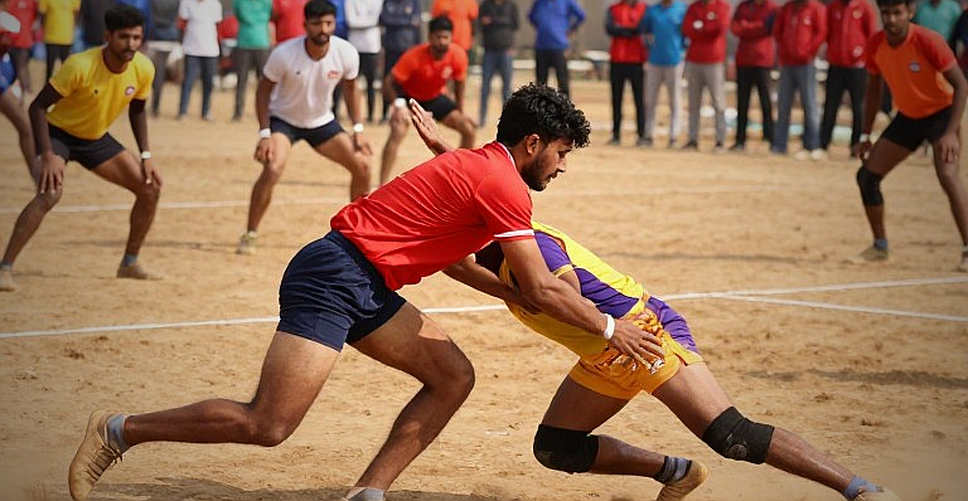
Now the rules, because without them the scores mean nothing. A raider enters the opponent's half, touches a defender and must return within 30 seconds. Throughout the raid he must chant "kabaddi-kabaddi" to prove he isn't inhaling — break the cant and the raid is void. Defenders score by stopping the raider in their own half. And then the engine behind kabaddi's blowouts: the All Out. When an entire side is ruled out, the opponent earns two bonus points and the whole team revives. After two empty raids, the third becomes do-or-die — score nothing and the raider himself is out. When a defensive side is down to three or fewer, a tackle becomes a two-point Super Tackle.
The consequence: big margins in kabaddi are often rule-generated rather than talent-measured. Once a team breaks, the All Out cycle begins, and a 20-point gap becomes 50 in four minutes. England's 68-18 and Tanzania's 66-17 over Nigeria are products of that machinery, not merely of skill.
And now the structural fact under everything. Iran are not here. Iran are not a Commonwealth member, so they are structurally excluded. This is the same Iran that beat India 27-18 in the 2026 Asian Games semifinal — the first time India failed to win men's kabaddi gold at the Asian Games. I remember that day well, because two months before it I wrote that Iran were not a spoiler but a co-favourite. When the strongest rival is absent, the shine of three wins inflates itself. That is not India's fault. It is the coverage's fault.
Inside the three wins: what the score says and conceals
Three matches, three wins, average margin a shade above sixteen. Comfortable, not dominant. 20, 14, 14.
Now the comparison that stung most. England scored 68 against Nigeria — they are a scoring side, not just a shield. Against India that same England folded to 26. A 42-point suppression, the most concrete defensive data point in this tournament, and it belongs to India's defence. So my first thesis forms: India's attack is under question; India's defence is not.
But enthusiasm skips a detail. If India's defence is that strong, how did Malaysia reach 23 and Uganda 30? A genuinely elite defence at this level stops at 15-18. Conceding 79 across three matches is a yellow flag — not an alarm, but a flag. It suggests India's defence is "good enough to win comfortably," not airtight.
Now the part where I have to restrain myself. The reporting on this tournament offers only team totals. No individual raid points, no tackle percentages, no successful-raid ratio, no lineups, no bench depth. Aside from captain Surjeet Singh, not a single player is named. The direct implication: whether India's attack runs through one raider I can neither confirm nor rule out. This is a data gap, not an all-clear. Any analyst who fills that gap with "team depth" is selling an assumption.
What does emerge is a three-tier structure. Tier one: India. Tier two: England, Tanzania, Malaysia, Uganda. Tier three: Nigeria, whose two losses came by 49 and 50. That is the floor of tier three, and it is the real story of this tournament — not India's wins, but the emptiness beneath.
Nigeria's collapse is not purely a talent gap. It is the multiplicative effect of the All Out rule. A broken team breaks repeatedly, and every All Out doubles the margin. Had Nigeria stopped two All Outs per match, those 66-17 and 68-18 scorelines would look like 45-30. In kabaddi, a huge margin is often the system speaking, not a measuring stick for talent.
And if I'm wrong?
My first counter-argument is that I may be calling a plan a weakness. India may be conceding 26 on average because they refuse to make cheap tackles. Against a weak raider, an aggressive tackle is a bad bet — one miss and the raider is free. It is also possible India used this low-pressure round to experiment with defensive combinations that won't be repeated against Iran. If so, my criticism is baseless.
My second: the tournament's level is so low that margins are meaningless. If the objective is a win, what is the difference between 44-30 and 44-16? A team is winning comfortably and I am fretting over margins. That argument is strong, and in kabaddi it is very strong — no side opens its full pattern before a semifinal.
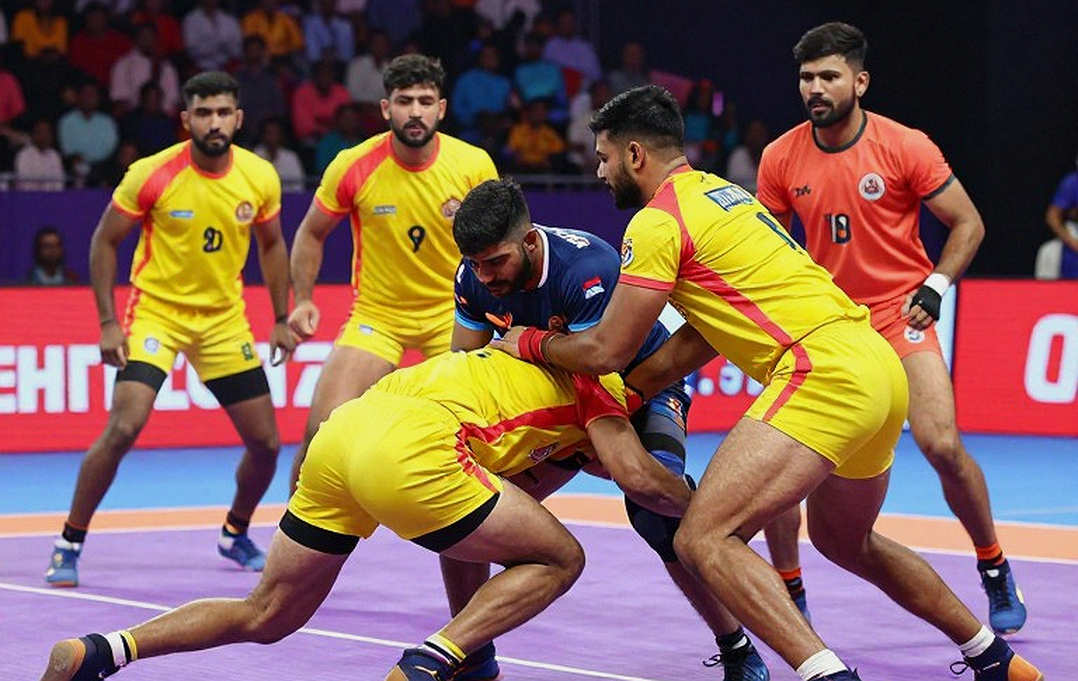
But one objection I will not accept. It cannot be said that my doubt is mere superstition. 79 points across three matches is evidence. And if a mid-tier England can score 26, what will a unified Iran and South Korea system produce at the Asian Games? That question is unanswered, and it is the room in which my second thesis can be bought: India's winning numbers are smaller than its dominance, and the clearest reason is Iran's absence — not a slowed Indian attack.
What I'll be watching
Against Nigeria, India's match is not a test but a scale. India winning is settled. The interrogation is: by how much? A 45-50 point win would show India can inflate a score when the opponent has already collapsed. Another 15-20 point win will harden my suspicion — India's attack breaks patterns slowly, and that slowness costs on bigger stages.
And one thing I must write anyway, because it is the most honest voice inside me. This championship, for India, is promotion rather than strategy. Kabaddi's real international friend is Iran, not our rival. And when we call 66-17 and 68-18 "development," we are admitting that Nigeria and Tanzania arrived as guests, not competitors. If kabaddi wants Olympic recognition — and I believe that road is blocked — it will come through competitive depth, not 50-point gaps. This championship gave India three wins. It gave kabaddi far less.
The question I carried in: is India's defence as good as Iran's? Four days of scoreboards did not answer it. That answer will be written on the shore of the 2026 Asian Games, and until then I will keep holding on to those 42 points — England's 68 down to 26.