
Tilak Varma's 26 Catches: The Record Is Filed, the Comparison Is Not
**मुख्य उत्तर**: तिलक वर्मा ने कैलेंडर वर्ष 2026 में फील्डर के तौर पर 26 T20I कैच लिए, जो एक वर्ष में सर्वाधिक है। पिछला रिकॉर्ड इंडोनेशिया के डैनिलसन हावो के 25 कैच (2025) का था। यह आंकड़ा खेले गए मैचों की संख्या पर निर्भर है, इसलिए इसे सीधे फील्डिंग श्रेष्ठता का नाप न मानें। **मुख्य तथ्य**: - भारत बनाम न्यूजीलैंड दूसरे T20I के पहले तीन ओवर में तिलक वर्मा ने टिम सीफर्ट और डेरिल मिचेल के कैच पकड़े। - भारत ने टॉस जीतकर पहले गेंदबाज़ी चुनी; चोटिल इशान किशन की जगह वैभव सूर्यवंशी को XI में मौका मिला। - मयंक यादव की जगह प्रिंस यादव भारतीय XI में आए; न्यूजीलैंड ने एडम मिल्न की जगह जैकब डफी को चुना। - रिकॉर्ड तालिका में हावो (इंडोनेशिया), वसीम (यूएई), मुनियांडी (मलेशिया) और मसाबा (यूगांडा) जैसे सहयोगी सदस्य देशों के खिलाड़ी शामिल हैं। - तिलक वर्मा की मुख्य भूमिका मिडिल-ऑर्डर बल्लेबाज़ी है; कैच रिकॉर्ड उनकी फील्डिंग भूमिका और मौकों की मात्रा दर्शाता है। **स्रोत**: टाइम्स ऑफ़ इंडिया (TOI) की रिपोर्ट; प्रकाशन तिथि स्रोत सामग्री में स्पष्ट नहीं — सत्यापन लंबित। रिकॉर्ड-आंकड़े स्टैटिस्टिशियन रिकॉर्ड्स पर आधारित; मैदान और मैच परिणाम स्रोत में नहीं दिए गए। **संबंधित प्रश्नोत्तर**: प्रश्न: क्या तिलक वर्मा का 26 कैच का रिकॉर्ड मान्य है? उत्तर: हां, कैलेंडर वर्ष 2026 में फील्डर के तौर पर 26 कैच के रूप में यह रिकॉर्ड बुक में दर्ज है, हालांकि इसकी तुलना में मैचों की संख्या और ICC स्तर का संदर्भ ज़रूरी है। प्रश्न: इस मैच में भारत के लिए सबसे बड़ी चिंता क्या है? उत्तर: इशान किशन की पुष्ट चोट है, जिससे विकेटकीपिंग संतुलन प्रभावित हुआ और वैभव सूर्यवंशी को मौका मिला। प्रश्न: इस कैच-रिकॉर्ड का असली क्रिकेट अर्थ क्या है? उत्तर: यह तिलक की फील्डिंग भूमिका और मौकों की मात्रा दर्शाता है, जबकि उनकी मुख्य पहचान मिडिल-ऑर्डर बल्लेबाज़ी बनी हुई है।
After the third over, a line was added to the scorebook: "c Tilak Varma". Two overs earlier, Mitchell's name had already gone into the same column. Inside the first three overs New Zealand lost both frontline top-order batters, both to catches. By that evening another line was filed: 26 catches as a fielder in calendar year 2026, the most in a single year in T20I history. The previous mark was 25, held by Indonesia's Danilson Hawoe, set in 2026.
The record is in the book, and being in the book is what a record is. The question is not the headline; it is the column that gets cut from beneath the headline — matches played. Before the debate, I open the laws of the game; after that, the statistician's ledger.
The T20I structure runs in three parts: powerplay, middle overs, death. The first six overs carry fielding restrictions, with only a limited number of fielders permitted outside the 30-yard circle. The effect is that catching chances thicken in the ring, and the fielder stationed at slip, gully or point gets the heaviest share of them in that phase. Both of Tilak's catches belong to this phase, which makes their value larger than two wickets — New Zealand's top-order structure was cracked in the powerplay and the middle order (Phillips, Bracewell, Santner) was pushed into a rebuilding role. That is inference, not assertion; the source gives no target or later score, so any comment on the result stays unverified.
India won the toss and chose to bowl. Both catches were therefore logged in the opening chapter of a chasing plan. There is no reference to pitch, dew or weather in the source, so it cannot be written that the decision to bowl first came from a dew forecast; that stays a directional inference, not a confirmation. The series context is New Zealand's tour of India, but the venue is not named in the source — that blank has to be carried forward.
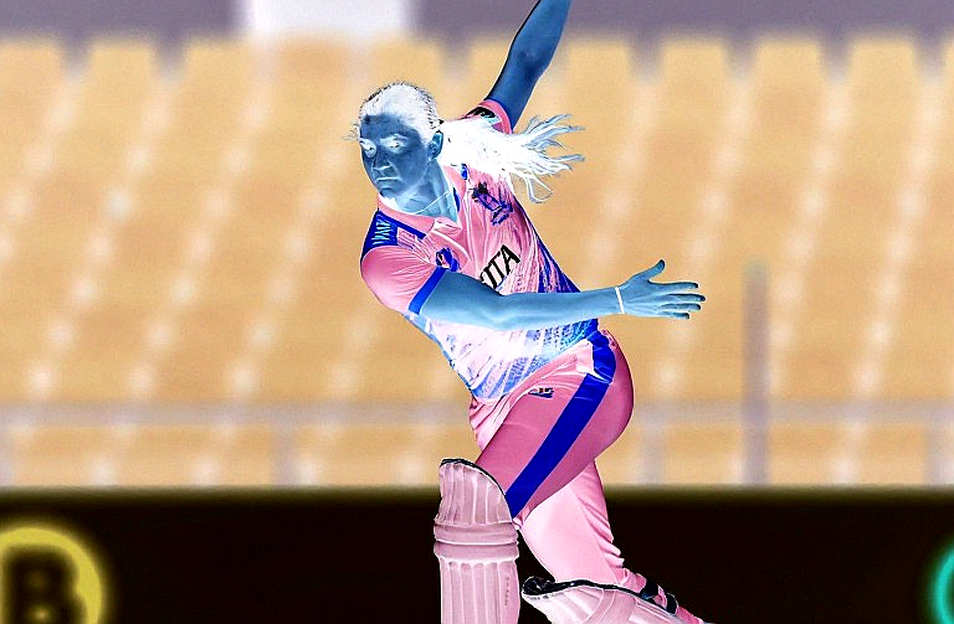
The structure differs on both sides. India made two changes: Vaibhav Sooryavanshi for the injured Ishan Kishan, and Prince Yadav for Mayank Yadav. New Zealand made one change: Jacob Duffy for Adam Milne, pace for pace, a like-for-like swap. India's XI carries seven batting-capable names and a full bowling attack: Abhishek Sharma, Sanju Samson, Sooryavanshi, Shreyas Iyer, Tilak Varma, Nitish Reddy, Axar Patel, Bhuvneshwar Kumar, Arshdeep Singh and Prince Yadav. New Zealand's attack is pace-heavy — Matt Henry, Duffy, Lockie Ferguson, Nathan Smith — with spin through Santner and Bracewell.
Two changes against one is a statement in itself. India is using the series as a squad-development window; New Zealand is running a continuity exercise. India's bench depth shows here: the wicketkeeper goes out injured and the XI still holds seven batting-capable names plus a genuine bowling attack.
Now the ledger. "Catches as a fielder" is a sub-statistic: wicketkeeper catches are excluded. The split is necessary, otherwise every keeper becomes the leading catch-taker of every series. That same split makes a second thing clear — this number counts opportunities, it does not grade skill.
A calendar-year catch record is fundamentally a volume-dependent statistic: it says as much about how many T20Is a player appeared in as about how well he fielded. India is a full member with a dense T20I calendar; chances arrive as fast as fixtures do.
Pick up the record table. Hawoe (Indonesia) on 25, Waseem (UAE), Muniandy (Malaysia), Masaba (Uganda) — a large part of the list belongs to associate-member nations. Those sides play heavy regional qualifier and tri-series schedules, which inflates individual catch tallies. Setting a full member's 26 directly against an associate player's 25 is not a like-for-like comparison. It stays in the record book, which is fine; reading it as a certificate of superior fielding is not.
What would an opportunity-adjusted reading look like? Three columns would do: catches, matches, average per match. If Tilak took 26 in 30 matches and Hawoe took 25 in 20, the average reverses the order. The source gives neither match count, so the calculation stays incomplete — and that incompleteness is the limit of the record, which the headline habitually conceals.
Catches are team-dependent in a way batting numbers are not. A catch only exists if a bowler creates an edge. Two catches in the first three overs are the product of new-ball execution — Tilak held the chances, he did not manufacture them. Tilak's record is partly India's bowling record.
The third point, the most cut of all: Tilak's primary game is middle-order batting, with fielding a strong second skill. The catch record does not by itself show that his all-round level has risen; it shows which role he was given, for how many overs, across how many matches. Role allocation and skill elevation are separate line items, and merging them into one column is the most common error in reading a ledger.
In a cricket-first newsroom I built a football law desk, where every decision was logged with law number, minute and camera angle. The same method applies here: catch number, match number, and tier (full member or associate). Without all three, a catch record is a number; with all three, it is a document. A decision tree is not a mood; it is a paper trail — and the paper trail of a record is kept by statisticians, not by a court.
The fourth point, buried under the headline. Ishan Kishan is injured, that much is confirmed, and Sooryavanshi came in for him. That is the most concrete signal about India's pipeline and, in this report, it matters far more than the catch record. Mayank Yadav's omission is a separate matter: the source does not call him injured, so treating it as injury would be inference — workload management is equally possible, or something else. The margin note often explains the headline better than the headline.
The sample question, separately. Two catches in three overs is a good innings return, not a trend. For years I have logged every T20I catch with minute, field position and the bowler's name; that log shows catch totals swinging like weather, because the chance itself is an event between bowler and batter, outside the fielder's control. Grading a fielding season on two catches in one innings is the same error as judging a bowler's career on one over.
Here I have to defend the record, because defending and verifying are different jobs. The record book counts; it does not grade difficulty. If the criterion is most catches by a fielder in a calendar year, then 26 is the record, full stop. The ledger said one thing, the replay said another: the ledger says 26, the replay says that behind the 26 stand the number of matches and the shape of the associate-member calendar. Both are true, and holding both in the same piece is journalism; picking one is publicity.
The real contrarian question is this: the headline says "world record" and the reader absorbs "the world's best fielder". That gap is dangerous because selectors and analysts can make the same mistake — treating a volume record as a skill upgrade while fixing future roles. The modern T20 structure has already turned the middle-order batter into a powerplay ring fielder; that is a change of role, not a fielding revolution. The record is a side effect of that change, not its proof.
What to watch next. Kishan's recovery, because the wicketkeeping balance rests on it. Sooryavanshi's continuity, because the real pipeline lesson sits there. And Tilak's catch total at year-end, which will climb anyway, because the calendar has not closed. One small request to the statisticians: add a matches-played column to that table. One column changes the entire context, and then the headline will not need to be cut.