
होमAthleticsHanoi’s 1:30 a.m. Race: A 2:47:52 Course Record, 21 Minutes Outside the Olympic Standard
Hanoi’s 1:30 a.m. Race: A 2:47:52 Course Record, 21 Minutes Outside the Olympic Standard
मुख्य उत्तर: VPIM 2026 हनोई मैराथन में महिला विजेता फाम थी होंग ले का 2:47:52 कोर्स रिकॉर्ड था, राष्ट्रीय रिकॉर्ड नहीं; यह महिला ओलंपिक मानक 2:26:50 से लगभग 21 मिनट बाहर है। पुरुष विजेता हुइन्ह अन्ह खोई का 2:31:49 पुरुष ओलंपिक मानक 2:08:10 से लगभग 23:39 बाहर रहा। मुख्य तथ्य: - महिला विजेता फाम थी होंग ले: 2:47:52; 2025 VPIM के 2:53:57 से 6:05 सुधार। - पुरुष विजेता हुइन्ह अन्ह खोई: 2:31:49; विश्व रिकॉर्ड 2:00:35 से 31:14 धीमा। - कोर्स में लॉन्ग बिएन, न्हात तान और डोंग ट्रू पुल; चढ़ाव, हवा और नमी समय धीमा करते हैं। - शुरुआत 1:30 बजे; 11,000+ धावक, चार दूरियां; एलीट फिनिश सर्कैडियन ट्रफ के करीब। - आयोजक रिकैप में AIMS प्रमाणन का दावा; स्वतंत्र सत्यापन या मेडिकल रिपोर्ट सार्वजनिक नहीं। स्रोत: VPBank Hanoi International Marathon 2026 आयोजक रिकैप; प्रकाशन तिथि सार्वजनिक नहीं। संबंधित प्रश्नोत्तर: प्रश्न: क्या 2:47:52 वियतनाम का राष्ट्रीय रिकॉर्ड है? उत्तर: नहीं, आयोजक रिकैप इसे कोर्स रिकॉर्ड कहता है; राष्ट्रीय रिकॉर्ड का दावा नहीं है। प्रश्न: क्या 1:30 बजे की शुरुआत तेज समय के लिए थी? उत्तर: नहीं, यह 11,000+ धावकों और बंद सड़कों का लॉजिस्टिक्स समाधान था; यह सर्कैडियन ट्रफ के करीब पड़ता है। प्रश्न: क्या यह World Athletics Label इलीट रेस है? उत्तर: उपलब्ध रिकैप में ऐसा दावा नहीं है; इसलिए यह रैंकिंग या ओलंपिक वरीयता का आधार नहीं है।
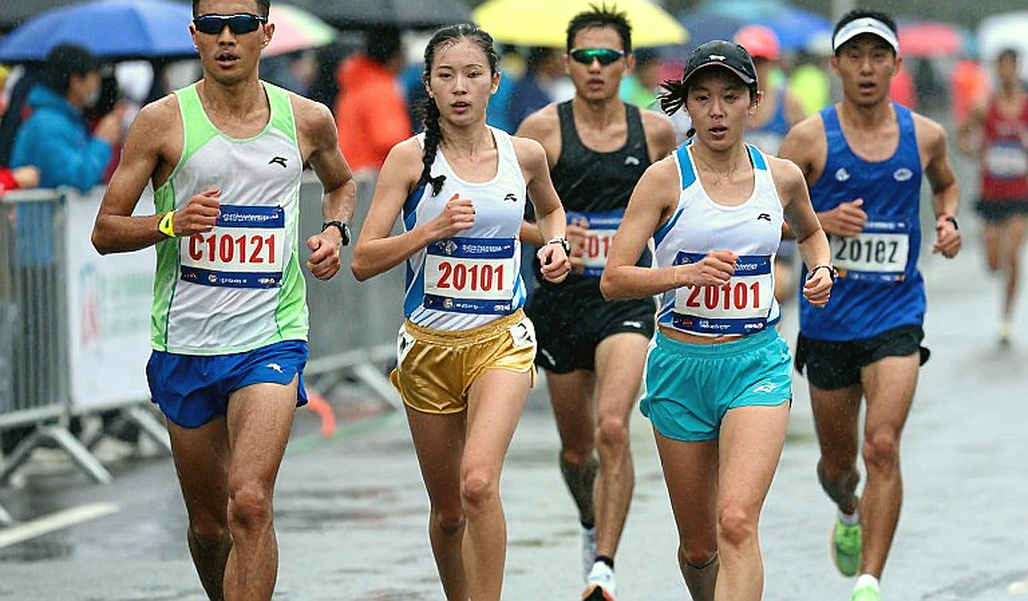
At 1:30 a.m. on the roads of Hanoi, the first wave went off. The organizer recap for the VPBank Hanoi International Marathon 2026 says more than 11,000 runners started across four distances: 42.195 km, 21 km, 10 km and 5 km. Standing near the start line, I heard more radio chatter from medical tents and volunteers than noise from the crowd. A marathon story usually begins with a finish-line photograph; mine began when the first elite pack turned toward the Long Bien Bridge and settled into rhythm.
I came for the economics; I stayed for the medicals. Years of watching road races have made one thing clear: a finish time is never only a training output. It is a ledger of the day’s temperature, humidity, course gradients, start hour and medical protocol. The Hanoi edition opens that ledger.
The race sits outside the World Athletics Label elite road circuit. The organizer-driven recap frames it as city branding, tourism and mass participation. The course is described as AIMS-certified, but no independent verification is public. The route lists three lakes, the Ho Chi Minh Mausoleum, the Thang Long Imperial Citadel, the Flag Tower and three bridges. That list is attractive for a tourism department; for a marathon body, it is a load profile.
Women’s winner Pham Thi Hong Le ran 2:47:52, roughly 3:59 per kilometre. Men’s winner Huynh Anh Khoi ran 2:31:49, roughly 3:36 per kilometre. Put those numbers against international standards and the picture changes. The women’s world record is 2:09:56 by Ruth Chepngetich in Chicago 2026; Pham is about 37:56 slower. The men’s world record is 2:00:35 by Kelvin Kiptum in Chicago 2026; Khoi is about 31:14 behind.
The Olympic standard comparison is starker. Against the Paris 2026 reference of 2:26:50 for women, Pham is 21:02 outside. Against 2:08:10 for men, Khoi is 23:39 outside. The Tokyo 2026 World Championships women’s standard of 2:23:30 is further away. This is not the gap of a bad day; it is a full competitive tier. In Hanoi, these are domestic-elite performances, not international-elite ones.
The recap’s brightest line says Pham broke her own race record. The record broken is a course record. It is not a national record, and no personal best is claimed. Her 2026 VPIM time was 2:53:57; in 2026 she ran 2:47:52. That is a 6:05 improvement, about 3.5 per cent. At that level, a single-year jump of that size is large. Treating it as pure athletic progression would be hasty. Course changes, weather, pack dynamics and training can all be part of the bundle. The 2026 edition carries a new Pixel Art and Hanoi Vibes identity, which suggests rebranding and possibly route revision.
The body of the course is the real story. Long Bien is a 120-year-old steel truss bridge. Nhat Tan and Dong Tru are modern cable-stayed bridges with long approach viaducts. Crossing three bridges in 42 km means ramp gradients, wind exposure on open spans, repeated surface transitions and narrow turns around the Mausoleum and Citadel precincts. Net elevation drop would invalidate a record; net elevation gain merely slows the field. The organizer’s claim that golden weather helped fast times is promotional work, not a measured course profile.
Hanoi in autumn usually sits in the 20–24°C band, but night relative humidity can run above 80 per cent. For marathon thermoregulation, high humidity is the dominant limiter even at moderate ambient temperature. Sweat does not evaporate, core temperature rises, heart rate climbs and pace falls. In that humidity, exercise-associated hyponatremia, gastrointestinal distress, Achilles and plantar load, and hamstring strain all become more likely. In the medical room, the scoreboard disappears and the body speaks.
The 1:30 a.m. start is a logistics solution, not a performance optimisation. More than 11,000 runners, four distances, closed city roads and wave starts require a long operational window. The pre-dawn start dodges Hanoi’s daytime heat, but it pushes the elite race toward the circadian trough. The core-temperature nadir and lowest neuromuscular readiness are generally placed around 03:00–05:00. Elite finishers cross the line inside that window. That is a real, under-discussed performance tax.
The recap mentions no athlete injury, hospital admission or medical withdrawal. I will not diagnose a knee, heart or muscle from a television frame. I keep a file on every knee, and the file always starts with a question: where is the report? Here, there is no report. What is absent cannot become a diagnosis.
The biggest framing distortion is calling Pham the queen of the running track. Inside Vietnam she may be the domestic reference. Globally, 2:47:52 is a strong sub-elite or amateur-elite mark. Conflating the two levels is the recap’s central error. The same applies to Khoi’s 2:31:49. Leading the local field and sitting near an international standard are different achievements.
The second contrarian angle is the treatment of a fast time as pure progress. A 3.5 per cent improvement at that level is large, but tying it to one cause is a mistake. The course may have changed, the weather may have changed, the pack may have changed, the training may have changed. Giving all the credit to one factor is like crediting only the goalkeeper for a win. In road racing, validity questions come from course and climate, not wind legality.
The third contrarian angle is city economics. VPBank’s name, Hanoi’s branding, 11,000 runners and the cost of closing roads make this an urban event. The organizer recap gives no entry fees or prize money, so I will not invent economic claims. But the spend on medical tents, volunteers and night-start logistics is part of the race’s credibility. The day that ledger is public, Hanoi’s marathon can be called a road-running ecosystem rather than only city branding.
In the medical room, the scoreboard disappears and the body speaks. In Hanoi, the body said this: the course is not flat, the humidity is not kind, and the 1:30 a.m. start is there to manage the field, not to chase fast times. Without accepting those three facts, turning 2:47:52 into an international benchmark is self-deception.
For the next report, I need four numbers: wet-bulb globe temperature at the start, elevation gain at each bridge, the medical-tent rate among finishers and the dropout rate. A fifth: the number and type of doping tests. If those are missing, 2:47:52 remains a city-branding artefact, not an elite benchmark. When the band plays again at 1:30 a.m. on Hanoi’s roads, the first question should be: what was the temperature that night, and how many bodies reached the medical tent?

संबंधित खिलाड़ी
अनुशंसित
Hanoi Marathon: A 'Queen's' Crown Between the Two Hands of a Clock2026-10-22
VPIM 2026 Hanoi Marathon: The Gap Between Domestic Records and International Standards2026-10-22
VPIM 2026 Hanoi Marathon: The 2:47:52 'Record' and the 21-Minute Gap to Olympic Standard2026-10-22
VPIM 2026 Hanoi Marathon: A 2:47:52 Win, But 21 Minutes Off the Olympic Standard2026-10-22
Hanoi’s 1:30 a.m. Race: A 2:47:52 Course Record, 21 Minutes Outside the Olympic Standard2026-10-22
Wind Reading N/A, Venue N/A: The Indian Women's Athletics Record That Was Never Written2026-10-22
अनुशंसित
VPIM 2026 Hanoi Marathon: The Gap Between Domestic Records and International Standards2026-10-22
The Empty Cell: Indian Athletics' Loudest Voice Is the Sheet Nobody Ever Filled2026-10-22
VPIM 2026 Hanoi Marathon: A 2:47:52 Win, But 21 Minutes Off the Olympic Standard2026-10-22
VPIM 2026 Hanoi Marathon: The 2:47:52 'Record' and the 21-Minute Gap to Olympic Standard2026-10-22
Hanoi Marathon: A 'Queen's' Crown Between the Two Hands of a Clock2026-10-22
Hanoi Marathon: A 2:47:52 Crown, Three Bridges and the Unspoken 1:30 a.m. Tax2026-10-22
अनुशंसित
VPIM 2026 Hanoi Marathon: A 2:47:52 Win, But 21 Minutes Off the Olympic Standard2026-10-22
The Empty Cell: Indian Athletics' Loudest Voice Is the Sheet Nobody Ever Filled2026-10-22
Hanoi's 2:47:52: A Course Record Made, Still 21 Minutes Off the Olympic Standard2026-10-22
Hanoi Marathon: A 2:47:52 Crown, Three Bridges and the Unspoken 1:30 a.m. Tax2026-10-22
Wind Reading N/A, Venue N/A: The Indian Women's Athletics Record That Was Never Written2026-10-22
VPIM 2026 Hanoi Marathon: The Gap Between Domestic Records and International Standards2026-10-22
अनुशंसित
Hanoi’s 1:30 a.m. Race: A 2:47:52 Course Record, 21 Minutes Outside the Olympic Standard2026-10-22
1:30 A.M. on Long Bien Bridge: Hanoi's Record Was 2:47:52, and the Question Is 21 Minutes2026-10-22
Hanoi Marathon: A 'Queen's' Crown Between the Two Hands of a Clock2026-10-22
VPIM 2026 Hanoi Marathon: A 2:47:52 Win, But 21 Minutes Off the Olympic Standard2026-10-22
Hanoi's 2:47:52: A Course Record Made, Still 21 Minutes Off the Olympic Standard2026-10-22
VPIM 2026 Hanoi Marathon: The Gap Between Domestic Records and International Standards2026-10-22