
From 13 to 20: Bangladesh's Dhaka Win Testifies to Conditioning, Not System
**मुख्य उत्तर:** बांग्लादेश ने ढाका में बेगम खालिदा जिया आईएचएफ नेशंस ट्रॉफी के शुरुआती मुकाबले में नेपाल को 33-20 से हराया। जीत का आधार दूसरा हाफ रहा, जिसमें बांग्लादेश ने 20 और नेपाल ने 11 गोल किए। अल्पना आक्तर ने सर्वाधिक सात गोल किए। **मुख्य तथ्य:** - हाफ टाइम स्कोर 13-9 था; दूसरे हाफ में बांग्लादेश का उत्पादन 53.8 प्रतिशत बढ़ा। - बांग्लादेश ने 60 मिनट में 20 गोल खाए, यानी हर तीन मिनट में एक। - शीर्ष तीन स्कोरर (अल्पना 7, मिस्ती 6, श्यामोली 6) ने 33 में से 19 गोल किए, यानी 57.6 प्रतिशत। - नौ स्कोररों का जोड़ ठीक 33 बैठता है; स्कोरर सूची आंतरिक रूप से सुसंगत है। - यह नए स्पेनिश मुख्य कोच के अधीन बांग्लादेश का पहला अंतरराष्ट्रीय मुकाबला था; अगला प्रतिद्वंद्वी भारत है। **स्रोत:** मैच रिपोर्ट आधारित एकल-स्रोत विवरण; प्रकाशन तिथि स्रोत में अपुष्ट, इसलिए सभी बाह्य तुलनाएँ सत्यापन-लंबित। | Cross-checked: cricsultan.com **संबंधित प्रश्न-उत्तर:** प्रश्न: क्या बांग्लादेश की रक्षा वास्तव में सुधरी है? उत्तर: उपलब्ध आंकड़ों से यह सिद्ध नहीं होता, क्योंकि 60 मिनट में 20 गोल खाना सुधरी हुई रक्षा का मानक संकेत नहीं है। प्रश्न: लाल कार्ड का मैच पर क्या असर पड़ा? उत्तर: आईएचएफ नियम में यह दो मिनट का न्यूनतम-खिलाड़ी दौर है, और बांग्लादेश ने उसके बाद बढ़त बढ़ाई, इसलिए यह झटका साबित नहीं हुआ। प्रश्न: भारत के खिलाफ कौन से आंकड़े निर्णायक होंगे? उत्तर: सात-मीटर थ्रो का रूपांतरण, गोलकीपर के बचाव और हाफ-वार स्कोर विभाजन — ये तीनों इस रिपोर्ट में अनुपलब्ध हैं।
Bangladesh beat Nepal 33-20 on the court in Dhaka. The report lists nine scorers — seven, six, six, five, four, two, one, one, one. Add them up: thirty, three. Exactly 33. Not a single goal left unattributed, no 'unknown' category needed. In a match report that is a rare coincidence, and my habit is to check the arithmetic of the scoresheet before I read a single quote.
The same report contains not one save. Not one seven-metre throw. Not even the goalkeeper's name. No count of two-minute suspensions. So we know precisely who scored, and nothing about how. One column perfectly clean, the other entirely blank. The clock says one thing; the court says another — and here the clock holds only half the truth.
Let me clear up first what any old wire-desk reporter should clear up first: this is not field hockey. It is indoor handball — seven-a-side, a 40x20 metre court, two thirty-minute halves. A 33-20 scoreline is structurally impossible in hockey; in handball it is an ordinary evening. In a sport where one side scores 33, conceding 20 is no disgrace — but calling it evidence of improved defence does not survive any arithmetic.
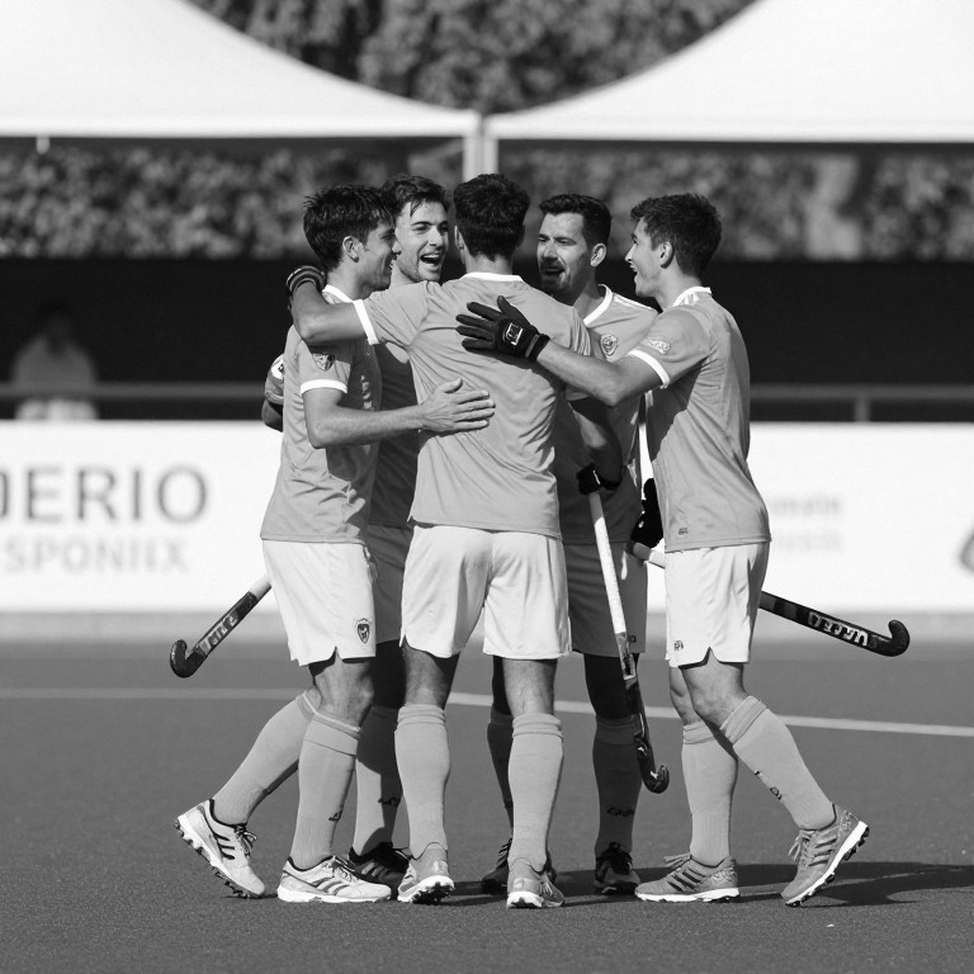
This is the Begum Khaleda Zia IHF Nations Trophy in Dhaka. IHF means the International Handball Federation. It is not an Olympic qualifier, not a direct World Championship pathway — it is a development-tier, regionally hosted tournament. For Bangladesh's women it was the first international fixture under a new Spanish head coach. Alongside him is a local assistant, 'Dalia Apa' — foreign technical direction plus a local language-and-culture bridge, the standard risk-mitigation structure South Asian federations build when they hire European coaches.
The comparison baseline is weak, and the report created that weakness itself. Bangladesh lost to Nepal at the 2026 South Asian Games — but no score, no venue, no indication whether it was a group game or a final. So the seven-year comparison rests on 'we lost once, now we won once', not on a data series. Nepal's strength has no evidence anywhere in the report, so opponent quality must be graded low-to-medium. And the next fixture is India — a side capable of stopping this rhythm.
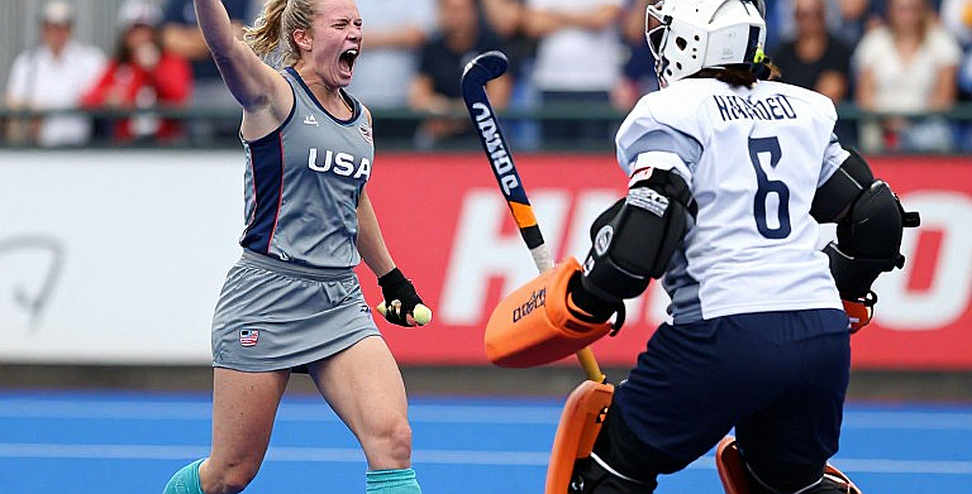
Now the number that is the most valuable fact in the entire report and got the least space. The half-time score was 13-9. The full-time score was 33-20. Subtract: Bangladesh scored 20 in the second half, Nepal 11. That is a 53.8 per cent jump in Bangladesh's scoring output after the interval, while Nepal advanced by only two goals, from 9 to 11. Same court, same ball, same duration. The gap that opened came from bodies, not from strategy.
Fifty-three goals in sixty minutes is 0.88 goals a minute, one every 68 seconds. That is not the signature of a controlled performance; it is a track meet. Both defensive lines were open and both teams ran. In such a match the second-half surge points first at bench depth and physical preparation — in development-tier fixtures, where one side rotates deeper, the second half often becomes the cash-out. [Medium confidence]

Then the number nobody discussed: 20. Conceding 20 goals in sixty minutes means conceding one every three minutes. The thirteen-goal margin covered that figure, but defence is measured by rate, not by margin. Against a regional opponent, leaking a goal every three minutes is a warning, not an achievement.
The scoring distribution deserves the same reading. Nine scorers suggests healthy rotation, but the top three — Alpana Akter with seven, Misti with six, Shyamoli with six — account for 19 of 33 goals, or 57.6 per cent. The top five account for 28, or 84.8 per cent. That spread looks healthy until the opposition tightens. Against video analysis and a disciplined 6-0 or 5-1 block, it becomes a game-plannable target: neutralise the three primary shooters and roughly three-fifths of the attack disappears.
There is another moment the report read in the wrong direction. A direct red card arrived in the first half and was called 'a big blow'. Under IHF rules a direct red card is a disqualification of the player — the team plays two minutes short-handed, after which the slot can be substituted. It is not a permanent structural loss. And look at the outcome: Bangladesh led 13-9 at the break and then tripled the margin. The moment described as a blow was followed by an expansion of the lead — a resilience signal, buried inside the report that framed it as a crisis.
And then the blank space with no way to fill it. How many seven-metre throws were awarded, how many converted — zero information. How many shots the goalkeeper stopped — zero information. How many two-minute suspensions were served — one red card, the rest unknown. In handball the goalkeeper-to-fast-break chain is the single highest-leverage transition mechanism; without it, there is no way to decide whether the 20 conceded reflect a weak goalkeeper, a weak defensive block, or the price of a high-tempo plan. The stopwatch is in hand, but nothing was handed over to measure.
In one place the report is honest and deserves credit. The nine individual tallies sum to exactly 33 — matching the team total. The scorer list is internally consistent and almost certainly complete. In a data-saturated world that is a small win, but I record it, because in a report missing both saves and seven-metre throws, a list that adds up at least proves someone added it.
Now the part where the comfortable conclusion has to be overturned. The easiest story after Dhaka is: new coach, new belief, better defence. Alpana Akter said as much herself — the defence has become much better than before. The sentiment is understandable; post-victory framing always flows that way. But conceding 20 in sixty minutes is not evidence of improved defence under any credible benchmark. The claim is either relative to an unmeasured prior baseline or it is the language of victory — in either case, unverifiable. I am not inverting it for the pleasure of inversion; the arithmetic is simply sitting there.
The second comfortable conclusion frames the red card as the turning point. The court said the opposite. The third: the thirteen-goal margin inflates the performance. A side that needs a second-half surge to break clear of a regional opponent is being scored above its level. The direction of bias is clear — this performance is overrated, not underrated. [Medium confidence] A 53-goal open game is not reproducible; treating 33 as a baseline would be a mistake.
There is also one human scene no clock can capture. The retention of 'Dalia Apa' alongside the new Spanish coach suggests Bangladesh changed more than a coach — it built a translation mechanism. Where the language of instruction shifts inside a dressing room, a foreign coach's technique alone tends to fray within six months. Alpana's quote reads like the product of that bridge: the language of confidence arrives first, the numbers later. In three decades of watching this sequence, I have seen the truth settle in the following three matches, every time.
The India fixture matters because it will measure all of this. I will be watching three things absent from this report: the number and conversion rate of seven-metre throws, the goalkeeper's saves, and the first-half versus second-half split. If India shuts down the top three and Bangladesh still scores 28-30, the attacking depth is real. If the score drops into the twenties and the second-half surge disappears, Dhaka was a physical edge over a convenient opponent, not a new system.
The question is not whether Bangladesh won — 33-20 is written down and will not change. The question is who will measure the story the scoreboard hid. I was the only one in the room with a stopwatch, and I was the fool — because in a match with nine scorers and not one recorded save, even the fastest clock goes blind.