
Red Bull's First Engine, Horner's Phone Call, and a Garbled Race Record
**मुख्य उत्तर (≤60 शब्द)** क्रिस्टियन हॉर्नर ने न्यूयॉर्क के Autosport Business Exchange मंच पर बताया कि रेड बुल फोर्ड पावरट्रेन्स की पहली जीत के बाद शेयरधारकों ने उन्हें धन्यवाद-फोन किया। यह दावा हॉर्नर का अपना है और रेड बुल, फोर्ड या वेरस्टापेन से पुष्ट नहीं है; रिपोर्ट में जीत वाली रेस की पहचान भी गड़बड़ है। **मुख्य तथ्य** - हॉर्नर 2005 में जगुआर अधिग्रहण के साथ रेड बुल में आए; जुलाई 2025 में हटाए गए, लॉरेंट मेकीज़ ने जगह ली। - उनके कार्यकाल में 8 ड्राइवर्स और 6 कंस्ट्रक्टर्स चैंपियनशिप आईं — वेटल 4+4, वेरस्टापेन 4+2। - होंडा 2021 के अंत में निकली; रेड बुल ने 2025 तक होंडा-व्युत्पन्न यूनिट चलाईं, 2026 में फोर्ड के साथ अपनी यूनिट आई। - रिपोर्ट में जीत “मलेशिया में बहरीन ग्रैंड प्रिक्स” बताई गई है; ऐसा कोई कैलेंडर जोड़ा मौजूद नहीं। - पावर यूनिट की रिलायबिलिटी, माइलेज या ग्रिड पेनल्टी का कोई आंकड़ा नहीं दिया गया। **स्रोत** Autosport / Autosport Business, क्रिस्टियन हॉर्नर का सार्वजनिक संबोधन (Autosport Business Exchange, न्यूयॉर्क)। मूल प्रकाशन तिथि उपलब्ध सामग्री में दर्ज नहीं है। दावे एकल-स्रोत हैं और स्वतंत्र रूप से सत्यापित नहीं। **संबंधित प्रश्न-उत्तर** प्रश्न: क्या रेड बुल फोर्ड का इंजन 2026 में रेस जीत चुका है? उत्तर: हॉर्नर के अनुसार हाँ, पहली जीत और उसके एक हफ्ते बाद दूसरी जीत; पर रेस का सर्किट और तारीख पुष्ट नहीं है। प्रश्न: हॉर्नर को रेड बुल से क्यों हटाया गया? उत्तर: उनके अपने वर्णन में संस्थापक मेटशिट्ज़ के निधन के बाद मुख्यालय-केंद्रीकरण और टीम-स्वायत्तता के बीच गतिरोध बना, और वेरस्टापेन खेमे का समर्थन उनके साथ नहीं था। प्रश्न: रेड बुल के अपने इंजन का सबसे बड़ा अप्रमाणित जोखिम क्या है? उत्तर: पहले साल की रिलायबिलिटी — कंपोनेंट कोटा टूटने पर ग्रिड पेनल्टी बनती है, जो सीजन भर अंक खाती है, और इस पर कोई डेटा जारी नहीं हुआ।
Cristian Horner told a business audience in New York that after Red Bull Ford Powertrains' first win, the shareholders rang him to say thank you. The same report places that win at "the Bahrain Grand Prix in Malaysia", with a second victory "one week later in Singapore". Bahrain is Bahrain and Malaysia is Malaysia, and no recent calendar pairs either of them with Singapore seven days apart. When the first fact in a story does not sit inside itself, the numbers after it deserve a second build.
I built the dashboard twice before I trusted the first number. The second build showed an empty timing screen: no lap times, no sector splits, no GPS top speed, no reliability mileage. A race weekend is a ledger, and every lap writes a correction; here there is no lap on file to correct.

Not being able to fix the circuit of the maiden win is not a small blemish — it caps the confidence on every technical judgement downstream. Two timeline readings survive. Reading A: the power unit won in the opening rounds, an extraordinary debut for a start-up manufacturer. Reading B: Horner was removed in July 2026 and refers to "a call 15 months earlier", which puts the thanking call around October 2026; if Singapore falls in that window, the maiden win came late in the season, which is far more normal for a first-year manufacturer. Reading B is the more internally coherent; Reading A is the one the article's triumphant framing prefers. I publish both, because when two numbers disagree the job is to print the disagreement, not to smooth it.
Horner's record is verifiable and adds up cleanly. He joined in 2026 with the Jaguar acquisition, stayed twenty years, and in that span the team took eight drivers' titles and six constructors' titles. Sebastian Vettel's four and four plus Max Verstappen's four and two land exactly on eight and six. He was removed in July 2026 and replaced by Laurent Mekies. The spine of the story holds; the race detail does not.
The engine programme was born of necessity, not vanity. Honda announced its exit at the end of 2026, Red Bull spent a period without a supplier, ran Honda-derived units through 2026, and brought its own unit with Ford in 2026. Horner names that withdrawal himself as the trigger. Judged on that one criterion the project has already succeeded: it removed an existential dependency. A team waiting on a supplier and a team building its own engine are two different business risk profiles.
The 2026 framework was deliberately softened to allow exactly this. The electrical share is far higher, there is a separate cost cap for power unit manufacturers, bench and dyno testing is restricted, and new manufacturers get allowances. Chassis aerodynamic testing runs on reverse-order allowances, which favours the teams that finished behind. A new manufacturer winning in year one proves one of two things: the rule design worked, or the allowances overshot.
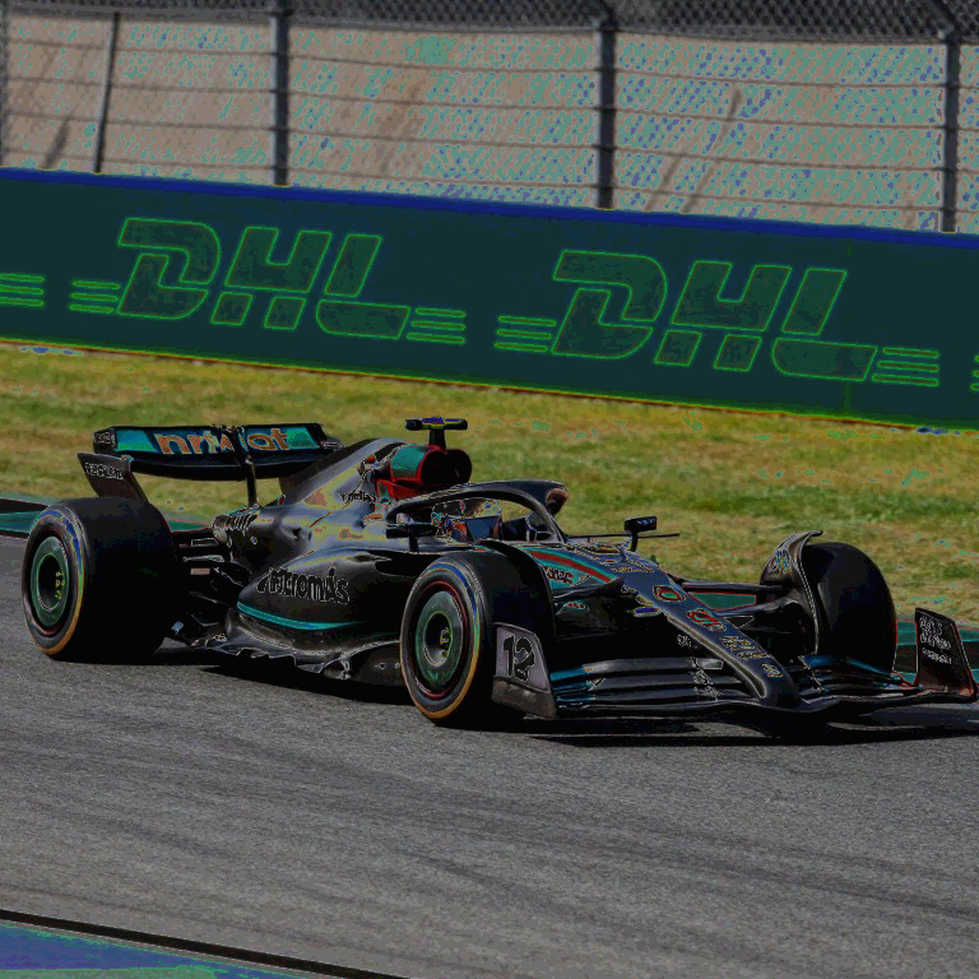
The "start-up" label is organisationally accurate and technically flattering. Red Bull did not start from zero; it acquired Honda's intellectual property and ran that family of units through 2026. The 2026 unit is a heavily re-engineered evolution delivered by a new organisation, not a cold start. That lowers the difficulty of the achievement and raises the expectation bar for 2027.
The largest technical gap is the silence on reliability. A first-year unit under high-electrification rules is exposed to component-quota breaches, and every breach becomes a grid penalty. A grid penalty is not a headline event; it is a quiet points tax across a season. The material discloses no mileage, no failure, no penalty. I do not chase the cliff; I chart the grip that disappears before it. Here the grip reading was never sent.
One separation matters. Horner merges chassis and engine into a single sentence — we did it on the chassis side, then came the challenge of doing it on the engine side. It sounds clean. Analytically they are separate programmes with separate failure modes, and the article supplies no chassis data for that season. Chassis performance shows on track; engine performance hides in a deployment curve.
Strategy analysis is not possible here. No compounds, no pit windows, no safety car, no weather, no pace deltas. The only weak inference is operational: back-to-back wins across consecutive weekends require freight turnaround, setup re-learning and reliability management at compressed cadence. That says something about robustness, not about strategic acumen. The absence of strategy detail on a conference stage is itself a signal — that format rewards narrative and grievance over specificity.
The real story is governance. Dietrich Mateschitz died in December 2026, and with him went the final arbiter who could turn any deadlock into a decision. Horner's own account rests on three elements: the founder's death, head-office centralisation versus team autonomy, and a deadlock. The one element reported as fact rather than as his interpretation is the driver camp: the Verstappen side was not with him, and support from the majority-owning Yoovidhya family eroded. That is structure, not context: decision rights at Red Bull Racing had shifted toward a configuration in which the lead driver's entourage functions as a stakeholder bloc.
A twenty-year incumbent's exit removes more than a manager — sponsor relationships, driver management, FIA and FOM relationships, the shareholder interface. Mekies inherits a functioning organisation and a different governance contract: less autonomy, more head-office reporting. The shareholders' post-win call reads as reputational repair on both sides: the company claims continuity, Horner claims vindication, and neither concedes the substance of the 2026 split. "Quite a different call to the one I had 15 months earlier" is a deliberate public juxtaposition, aimed at the paddock and at future employers rather than at the shareholders.
The commercial ledger opens separately. Works status is the most valuable structural asset in this landscape — deployment freedom, no supply-priority risk, and the option to turn cost into customer revenue. Few organisations can carry that capex under a cost cap. If the second team becomes the first customer, the manufacturer gets a two-team data and mileage base that no other new entrant enjoys.
Correlation is not causation. One or two wins are not evidence of a durable competitive shift; regulation resets routinely produce early noise before the resource-heavy teams converge. Where the numbers back the consensus, I will say so flatly: on the criterion of ending supply dependency, this programme has already succeeded. Whether the unit is fast is a different question. And where the story is garbled, its arithmetic still holds — eight and six add up, twenty years add up, July 2026 adds up. Model worship is the trap here: a competitiveness curve without mileage and penalty data is a handsome line and nothing more.
What to watch next is not the circuit of the maiden win but the component quota. Then the 2027 expectation bar, because a unit built on Honda's inheritance will no longer qualify for new-manufacturer relief. Then the first external customer deal, which decides whether a cost centre becomes a revenue centre. Standardisation is how a discovery survives the person who discovered it; the discovery here is that Red Bull builds its own engine, and it now needs a measure that can be taken again every race weekend rather than asserted from a stage. To anyone asking how fast the engine is: send the timing screen first.